

Contents
A home grower can get away with a thermometer and a gut feeling. A commercial operation can’t: consistency across every room, every cycle, and every batch is the entire business model, and that requires knowing exactly what’s happening in your environment, in real time, at every point in the room, not just near the door. This guide breaks down the actual sensor technology behind temperature, humidity, pH/EC, soil moisture, light, and CO2 monitoring, and how each one gets used at a commercial scale. If you’re growing at home and want the simpler version, our companion guide to the core sensors a home grower actually needs covers the basics without the engineering detail.
Temperature Sensors
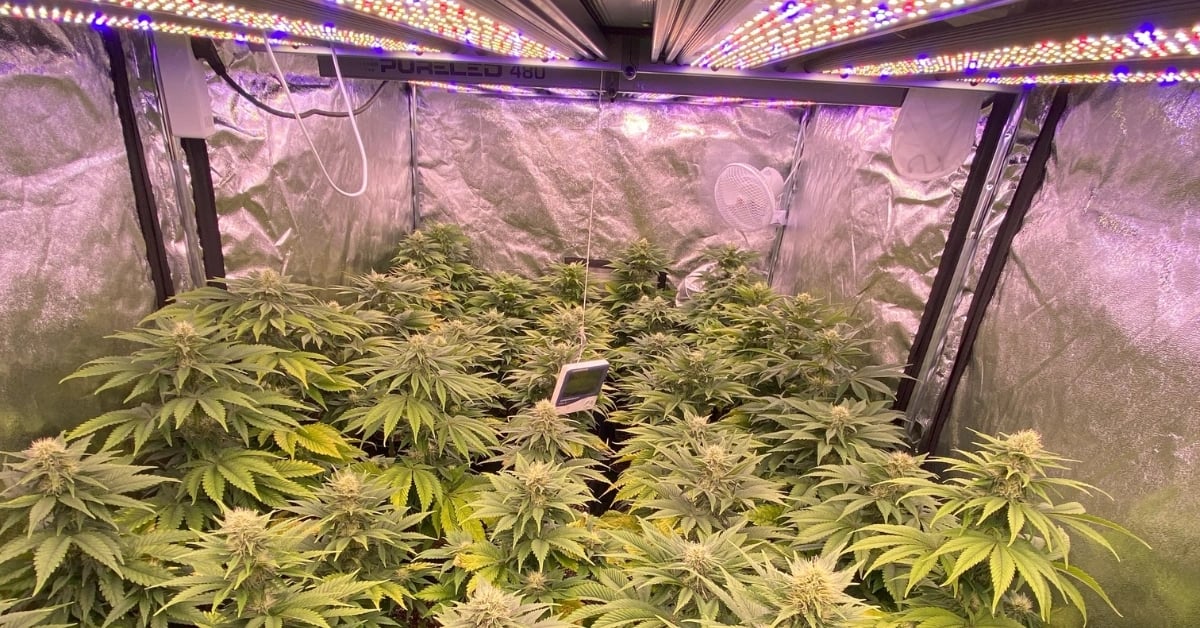
Three sensor types do most of the work here. Thermistors measure temperature through changes in electrical resistance, cheap, accurate, and the most common choice for general zone monitoring. Thermocouples generate a small voltage from the junction of two different metals, with the voltage output directly tied to temperature, placed at multiple points through a grow room, they give real-time readings across zones rather than a single reference point. Infrared sensors work differently: they’re non-contact, reading the infrared radiation a surface emits, which makes them well suited to canopy-temperature monitoring where you don’t want a physical probe sitting on the plant.
At commercial scale, temperature sensors don’t just report, they act: crossing a set threshold triggers HVAC systems, heaters, coolers, or fans automatically, and most modern systems integrate with remote monitoring so a facility manager can check and adjust conditions from a phone rather than walking every room.
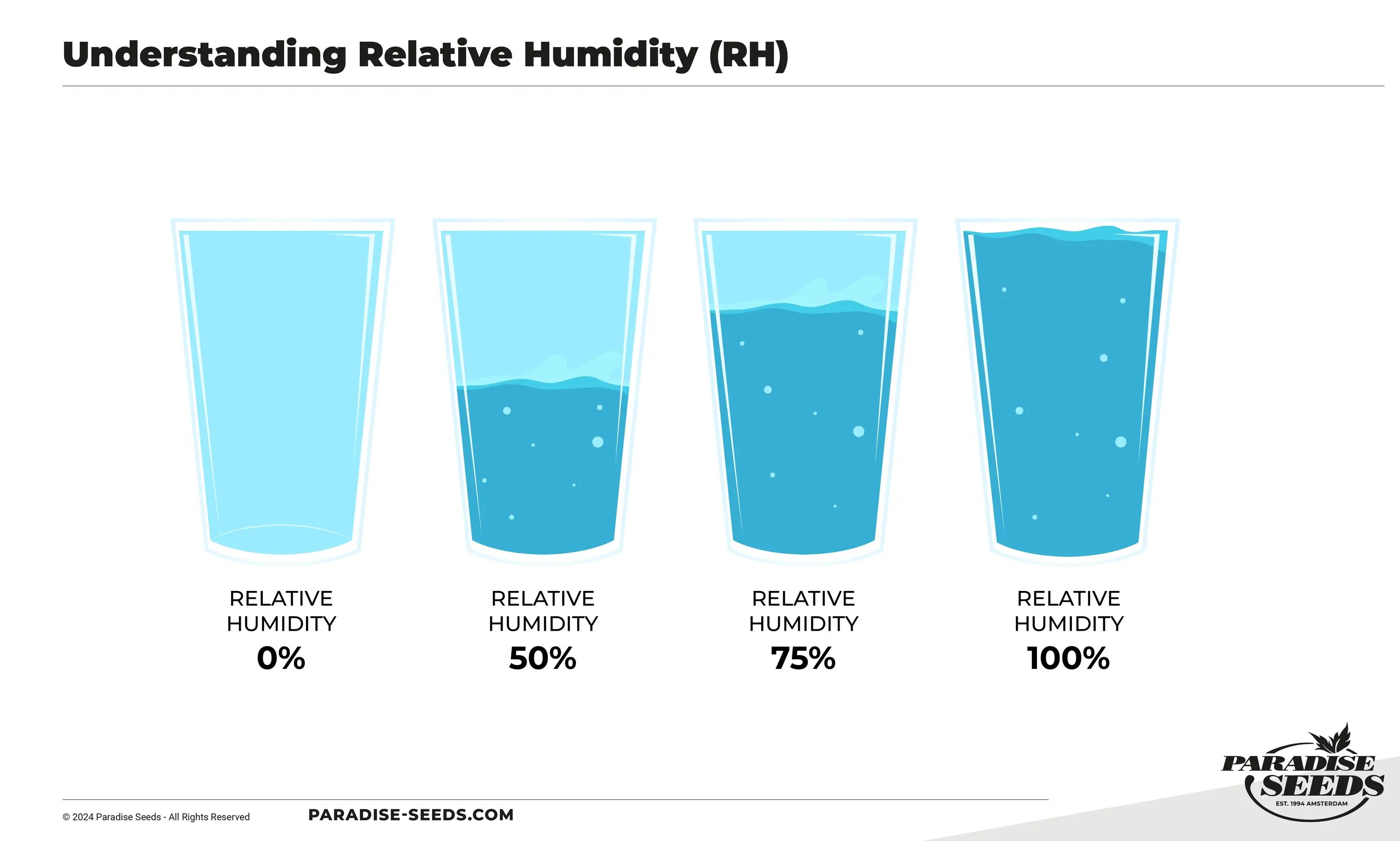
Humidity Sensors
Capacitive humidity sensors detect moisture through changes in the dielectric constant of a polymer or oxide layer, and they’re the more accurate, more stable option, especially at extreme humidity levels. Resistive sensors measure the same underlying moisture level through a resistance change in a moisture-sensitive material (often a salt or conductive polymer), cheaper, but less accurate at the extremes, more prone to drift, and more affected by dust and airborne contaminants, meaning more frequent recalibration.
Getting humidity wrong at scale isn’t a minor issue, high humidity is one of the fastest routes to mold and disease across an entire crop, not just one plant. Commercial humidity sensors typically drive automated dehumidifiers, humidifiers, or ventilation directly, closing the loop between measurement and correction without a person in between.
pH and EC Sensors
Manual pH meters require dipping a probe and reading manually, they need regular calibration and are generally accurate to about ±0.1 pH. That’s fine for occasional spot checks on a small operation, but it’s not built for continuous monitoring. Digital and continuous pH meters stay in solution and report constantly, often with automatic calibration and precision up to ±0.01 pH, the standard for an operation that needs consistent, defensible data rather than periodic snapshots.
EC sensors follow a similar split. Portable EC meters are compact, quick, and often waterproof, useful for spot-testing nutrient solutions or soil across multiple locations in a facility. Continuous EC probes stay submerged in a hydroponic system’s nutrient solution, tracking concentration in real time and feeding a controller that can adjust automatically. Multifunctional combo meters bundle pH, EC, TDS, and temperature into one device, useful when you want a single point of data collection rather than several separate instruments across your monitoring setup.
At commercial scale, pH and EC data isn’t just diagnostic, it’s what irrigation and nutrient-dosing decisions actually run on. Precision here is precision in your yield and quality consistency downstream.
Soil Moisture Sensors
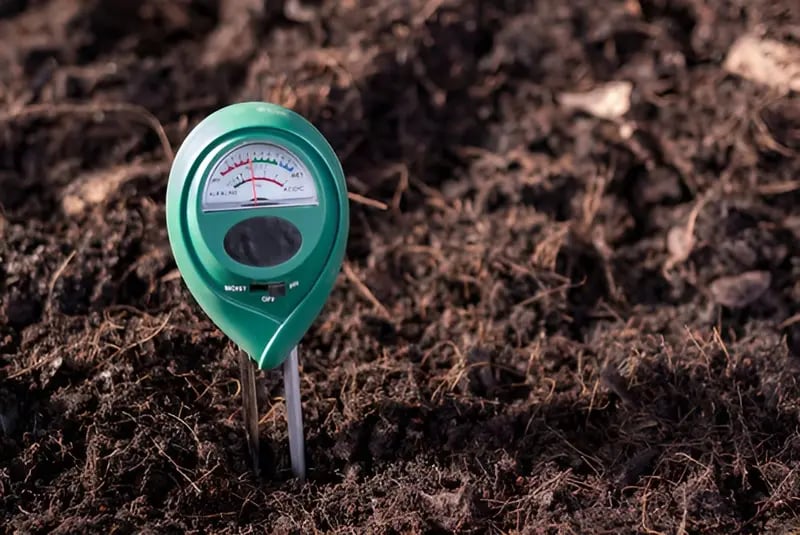
Capacitive soil moisture sensors measure the soil’s dielectric constant, which correlates with water content, they’re durable, corrosion-resistant, and built for continuous long-term placement in the substrate. Resistive sensors measure moisture through resistance between two electrodes, cheaper, but sensitive to soil salinity and requiring more frequent calibration to stay accurate. TDR (Time Domain Reflectometry) sensors send a timed pulse through the soil and measure the return, delivering highly accurate readings that are largely unaffected by salinity, historically a research-grade tool, increasingly common in commercial cultivation for exactly that precision. Granular matrix sensors measure matric potential, how tightly water is held in the substrate, giving insight into how easily a plant can actually access the moisture that’s there, not just how much is present.
The output feeds directly into irrigation scheduling: catching over- or under-watering before it shows up as a visible plant symptom, which matters a lot more when a mistake affects a whole room rather than one pot. Our watering guide covers the fundamentals these sensors are built to fine-tune.
Light Sensors (PAR/PPFD)
PAR sensors measure light available for photosynthesis across the 400-700 nanometer range, the band plants actually use. PPFD sensors go a step further, quantifying the number of usable photons hitting a specific area per second (μmol/m²/s), which tells you not just that light is present but how much of it is actually usable at a given point in your canopy. Multifunctional light sensors combine PAR and PPFD with other environmental data (temperature, humidity) for a single integrated read on growing conditions.
At scale, this data does real work: identifying under-lit zones within a room, informing fixture repositioning or supplementation, and validating that what a light manufacturer claims on the box is what’s actually reaching the canopy in practice. If you’re already optimizing an LED setup, our guide to boosting LED grow light efficiency pairs well with this kind of measurement.
CO2 Sensors
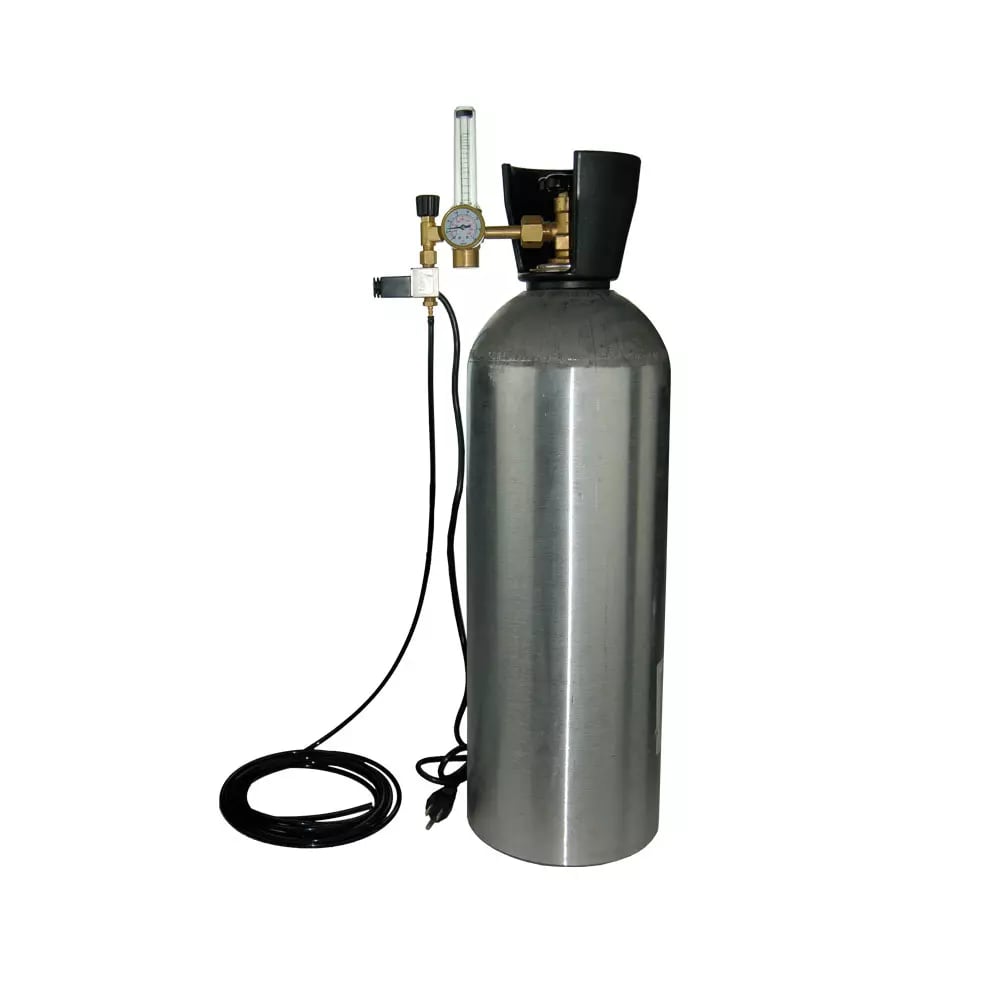
NDIR (Non-Dispersive Infrared) sensors pass infrared light through an air sample; CO2 molecules absorb specific wavelengths, and the sensor calculates concentration from that absorption. They’re the accuracy standard for both small and large operations. Electrochemical sensors measure CO2 through a chemical reaction with the sensor’s electrolyte, generating a current proportional to concentration, cheaper than NDIR but needing more frequent calibration, a reasonable choice for smaller operations or as a supplementary check in a larger one. Modular CO2 monitoring systems scale to support multiple sensors and alarm units across a facility, with customizable setpoints integrated into broader environmental control, built specifically for large cultivation operations that need facility-wide coverage rather than single-room readings. Portable CO2 meters don’t offer continuous monitoring, but they’re genuinely useful for spot-checking air quality and ventilation across different areas of a site.
Build Monitoring Into How You Grow, Not On Top Of It
We’ve been growing cannabis in Amsterdam since 1994, and the operations that stay consistent, harvest after harvest, are the ones that treat monitoring as part of the process, not an afterthought bolted on when something goes wrong. The right sensor stack won’t replace grower judgment, but it gives you the real-time, room-wide data that judgment alone can’t cover at commercial scale.
Not running a commercial operation? Our guide to the core sensors a home grower actually needs is a better starting point. Ready to put a properly monitored setup to work either way, browse our full seed collection for genetics bred to perform consistently under real environmental control.