

The outdoor cannabis plant must endure a threat from many enemies during its lifecycle, causing great frustration for the weed grower and then there’s slugs and snails on weed!
Their visitation can promote a real sense of disgust and lust for vengeance when the grower discovers a slimy trail extending across their plants’ leaves and buds. If you grow outside then you will recognize this as the calling card of the garden gastropod!
They are particularly active after fresh rain (or watering), which makes the ground more gastropod friendly, which is why Autumn can bring them out in force. Extremely unpleasant these slimy critters will take their time (they are, after all not known for their speed). They have very tiny mouths so won’t do huge damage in one session, but they will return and as they will destroy foliage faster than it grows, they are a threat that needs dealing with!
Contents
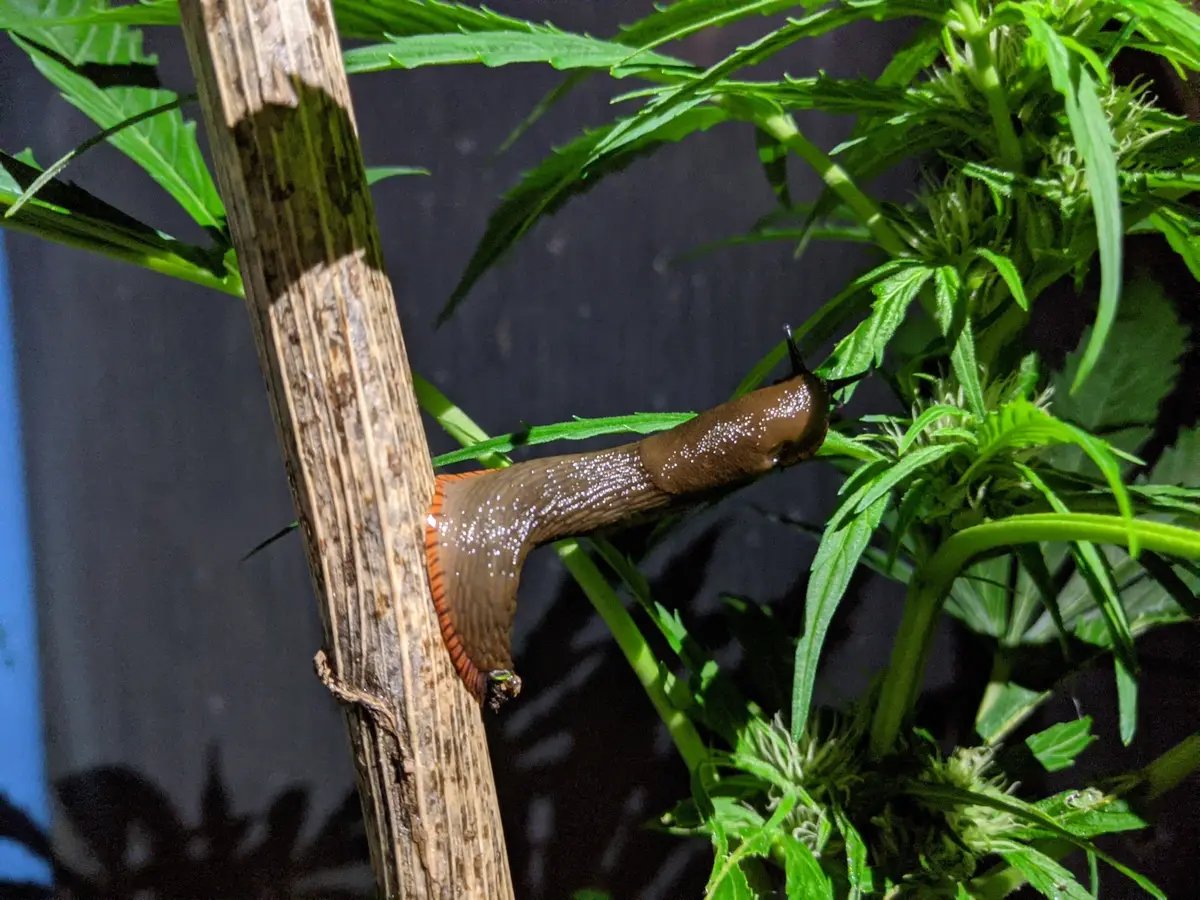
Controlling Slugs and Snails on Weed Plants
For such a slow moving assassin, slugs and snails are surprisingly effective in their hit and run attacks and with a life expectancy of 1 – 5 years they will damage this crop and hang around to damage a few more.
They move in after dark and are gone by the morning, shrinking their size and hiding away beneath tree bark, logs, rocks plant pots and planters to conserve their moisture from any exposure to the sun. Unfortunately they also have few natural predators, as animals and birds find their slime as disgusting as homo-sapiens (snakes, frogs, toads and hedgehogs are notable exceptions).
Therefore, to catch a slug and a snail on cannabis plants we must think like a gastropod, predict their movements and arrange an ambush…. *At this point we will say that what you do with them is up to your own moral compass. Some people like to destroy them, others like to relocate them. If they are being relocated however, make sure t take them far away (research shows that moving a snail 20 metres away will stop them returning).
Make The Journey Uncomfortable
In order to get to marijuana plants slugs and snails will have to cover some open ground, so militarize that zone with some unpleasant obstacles. Slug pellets are of course an option but we would prefer to promote organic measures which can be just as effective. Creating a barrier to disrupt their journey with wood ash, crushed egg shells, salt and even human hair is recommended (although be aware that you need to reset the obstacles after a heavy rain). Another great material if you live near the coast is seaweed, sun dried until crispy (sharp and salty), which can be sprinkled around the plant.
Set Up a False Home
In the same way that the Feds carry out sting operations when they set up a fake company to bring the criminals to them, we can do the same with slugs and snails. Strategically placing old carpet or some cardboard near the plants (give it a good soaking with water to make it even more appealing), provides a safe haven for slugs and snails during the day… or so they think! Remove them, at source, every couple of days.
Set a Slug Trap
A beer trap is an anti-slug and snail device which has been a traditional remedy over the ages. Old pots and cans can be filled with beer and flour (but milk and a sugary solution seems to work just fine too). Set the trap and they will come and in numbers! Traps will need regular emptying as they fill up and turn into a gooey mass very quickly but they will reduce slugs and snails on weed issues. A more pre-emptive method is to bring in some nematodes which can be added to water and will live for up to six weeks in the ground. They are ingested by slugs and reproduce inside them leading to their death.
Night Patrol
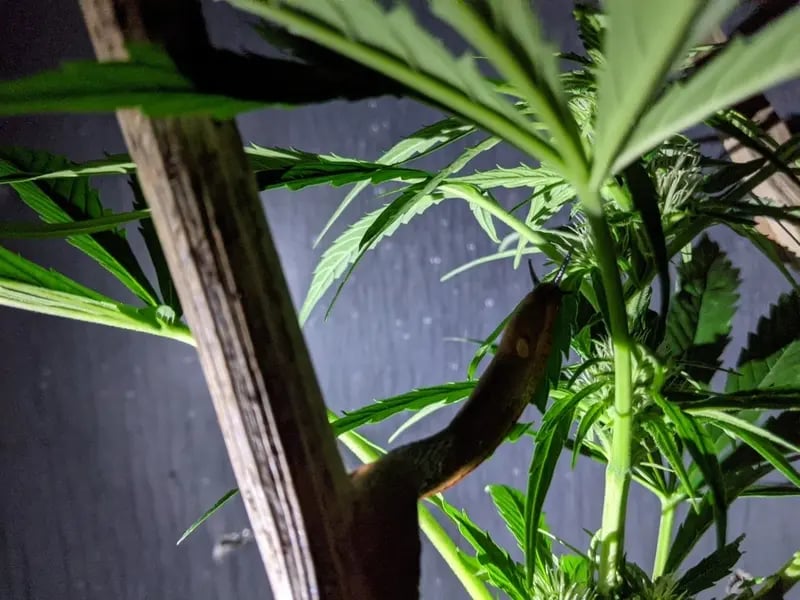
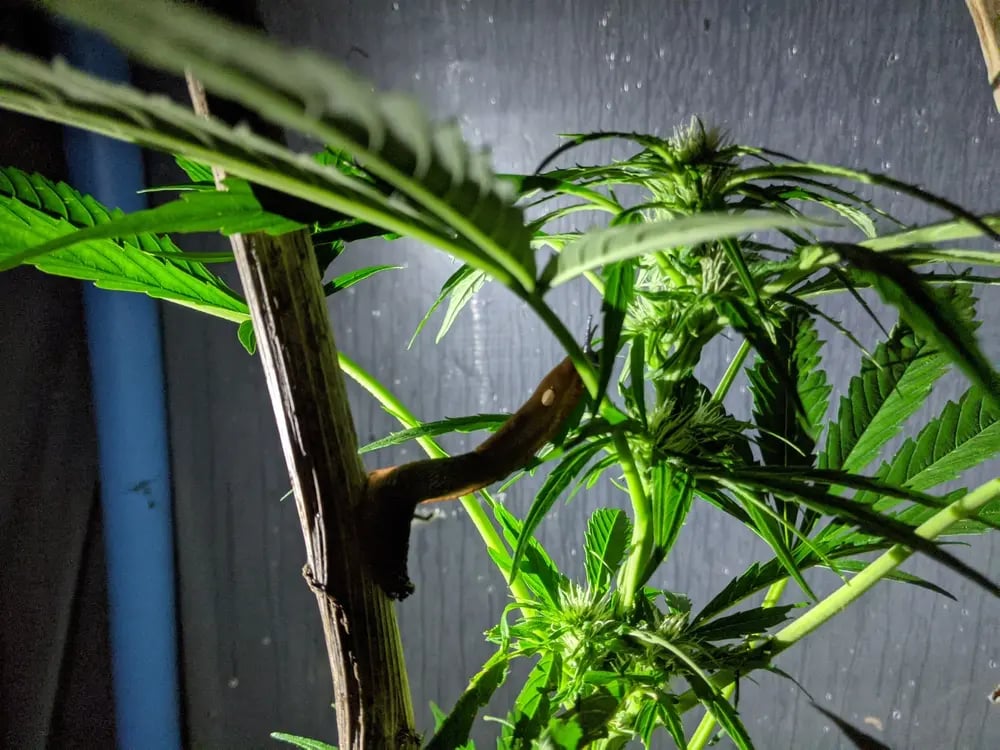
By far the best way to deal with problem is to catch them in the act! After dark is the time when slugs and snails come out to feast on marijuana and going out on night patrol with a torch (especially after fresh rain) will inspire sock, awe and satisfaction in equal measures as they can be literally picked off the plant like the most disgusting low hanging fruit you can imagine…
Can Slugs or Snails Get High on Cannabis?
No. Slugs and snails do not have a human-like endocannabinoid system with CB1 or CB2 receptors to experience the intoxicating effects of THC. However, they are strongly attracted to the moisture and decaying/tender plant tissue of cannabis foliage, making them a serious threat to outdoor crops.
Pet-Safe Slug Control: Protect Your Garden and Pets
Outdoor growers often resort to slug pellets to protect their cannabis crop, but not all products are safe for household pets or local wildlife.
Organic Iron Phosphate vs. Chemical Metaldehyde Pellets
- Iron Phosphate (Pet-Safe & Organic): slug pellets containing iron phosphate are widely regarded as a safer alternative to traditional slug poisons and are approved for use in many organic gardening systems. After feeding on iron phosphate, slugs and snails typically stop eating, retreat to sheltered areas, and die out of sight. Iron phosphate eventually breaks down into naturally occurring iron and phosphate compounds in the soil. While considerably less hazardous than metaldehyde, pellets should still be stored securely and kept out of reach of pets and children.
- Metaldehyde Pellets (Highly Toxic – Avoid): Many traditional blue slug pellets contain metaldehyde, which is highly toxic to dogs, cats, birds, hedgehogs, and other wildlife. Dogs are particularly at risk because they may readily consume the pellets, leading to life-threatening poisoning that requires immediate veterinary care. Metaldehyde can also harm non-target wildlife and contaminate the environment, making it a poor choice for gardens where pets or wildlife are present.
Chemical-Free Physical Barriers & Traps
If you prefer to avoid pellets altogether, natural physical barriers offer an effective defense against slugs and snails:
- Copper Tape & Wire: Copper tape wrapped around pots, raised beds, or greenhouse staging can deter slugs and snails. Contact with copper and their mucus creates a reaction that many slugs avoid, although effectiveness can vary depending on weather and the condition of the barrier.
- Classic Beer Traps: Shallow containers filled with beer attract slugs using the scent of fermentation. Slugs crawl into the trap and drown before reaching nearby plants. Empty and refill the traps regularly. Keep in mind that beer traps may attract additional slugs from the surrounding area, so they’re often most effective when used as part of a broader slug management strategy..
For the most effective and pet-friendly slug control, combine physical barriers, regular hand-picking (especially after dark), removal of damp hiding places, and, if needed, iron phosphate pellets used according to the manufacturer’s instructions.