

If you’re new to cannabis, or even if you have been around the block a few times, you may still be confused about the role that cannabis plant compounds play beyond cannabinoids like CBD and THC. This article takes a look at flavonoids and terpenes and how these compounds work, separately and together.
Contents
The dial has moved on the traditional focus of what is important in a cannabis plant for consumers. In the early days it was all about the cannabinoid compounds – THC and CBD primarily – with their psychoactive and therapeutic properties.
While the focus has slightly shifted to terpenes, another group of compounds remains largely in the shadows – let’s take a look at the role of flavonoids.
What are Flavonoids?
In English, the term flavonoid is something of a misnomer because it suggests a relationship with flavor or taste. However, flavonoids are a group of plant pigments which are present in a wide range of fruits, vegetables, and flowers and are the reason for their vibrant colours.
These pigments don’t just provide nice coloring, they also play an important role in protecting a plant from threats to its health such as UV and pests. In cannabis, flavonoids contribute to the plant’s unique therapeutic properties and work in harmony with cannabinoids and terpenes to create its overall effects and benefits.
Flavonoids are a sub group of phenolic compounds, the term used for a broad category of natural chemicals found in plants with recognized antioxidant, antimicrobial, and anti-inflammatory properties.
As such, flavonoids are an expanding area of research, with studies looking into their powerful antioxidant and anti-inflammatory effects.
What are Terpenes?
To understand flavonoids, it helps to understand their more famous cousins. Terpenes are volatile aromatic compounds produced in the same glands (trichomes) as cannabinoids.
They are the reason a strain smells like citrus, pine, or diesel. Their primary function in the plant is to attract pollinators and repel pests, but they are also a key part of what gives a strain its “personality.” Read more about terpenes, their role and individual qualities in this article Cannabis terpenes entourage effect.
The power of Flavonoids
Unlike terpenes, flavonoids are not primarily known for their aroma. Instead, they are plant pigments that are responsible for the vibrant colours we see in cannabis, from the deep purples of ‘Gulupa‘ to the reddish hues of ‘Red Velvet Auto’.
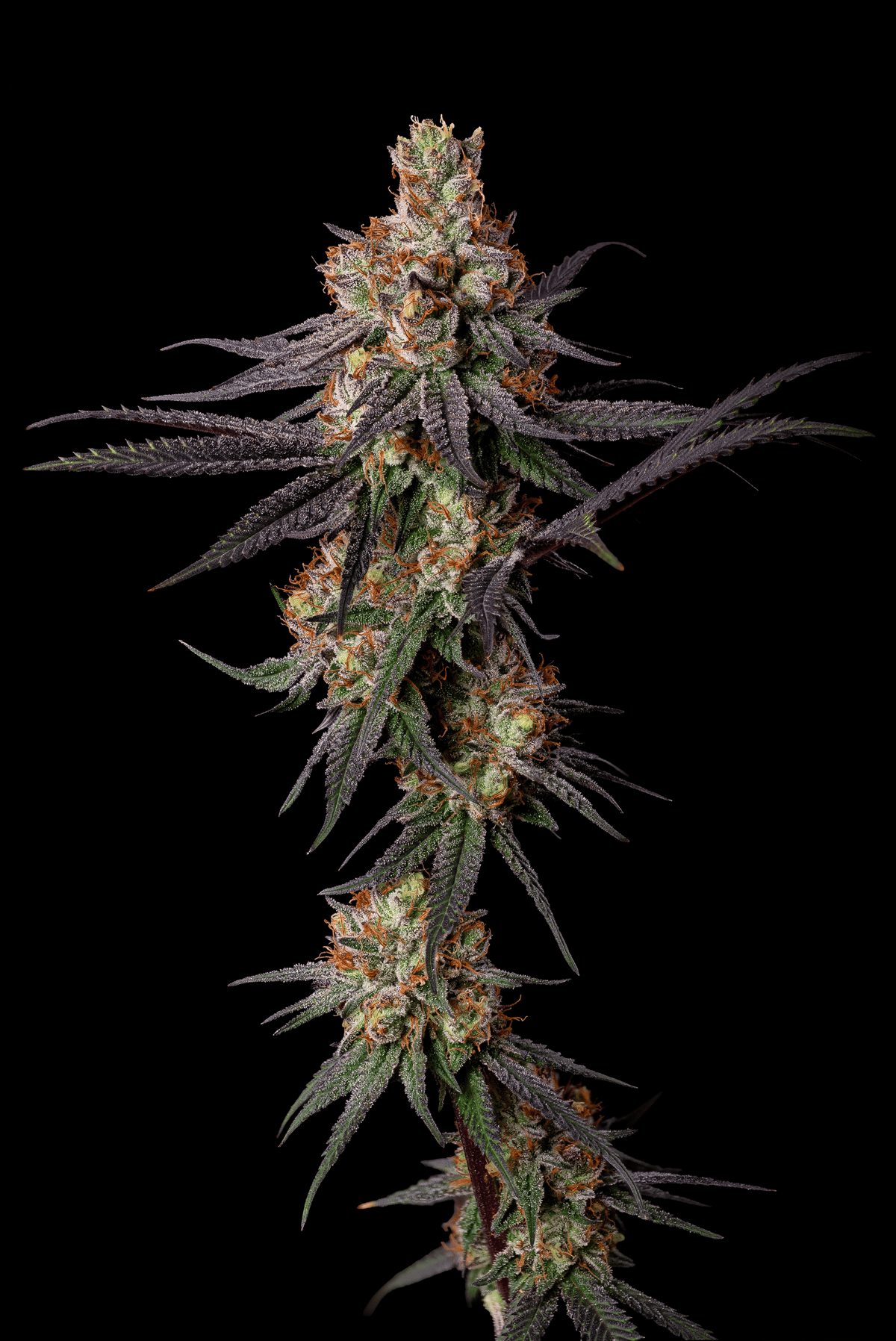
Flavonoids are a vast family of compounds found throughout the plant kingdom, from blueberries and kale to red wine and green tea. While over 20 different flavonoids have been identified in the cannabis plant, the most unique are the cannflavins, which are uniquely found in cannabis.
The true significance of flavonoids goes far beyond colour. Research shows that they are potent antioxidants and possess anti-inflammatory, anti-cancer, and neuroprotective properties.
For example, some studies suggest that Cannflavin A and B have anti-inflammatory effects up to 30 times more powerful than aspirin, targeting inflammation at its source without the adverse side effects of many over-the-counter pain medications. Other common flavonoids, such as quercetin and apigenin, are also being studied for their wide-ranging health benefits.
From Flavonoids to Flavoalkaloids
With interest from the pharmaceutical industry around the antioxidant, anti-inflammatory and anti-carcinogenic properties of phenolic compounds, particularly flavonoids, more research into flavonoids in cannabis is being undertaken.
A 2025 study, by researchers at the Stellenbosch University in South Africa, provided the first evidence of a rare class of phenolics, called flavoalkaloids, in cannabis leaves, prompting a call to growers not to toss away their cannabis trim!

Science Daily quotes one of the research paper’s authors, Dr Magriet Muller, who said;
“Most plants contain highly complex mixtures of phenolic compounds, and while flavonoids occur widely in the plant kingdom, the flavoalkaloids are very rare in nature.”
Her colleague, Professor De Villiers, the paper’s main author, is quoted as saying “Our analysis again highlights the medicinal potential of cannabis plant material, currently regarded as waste. Cannabis exhibits a rich and unique non-cannabinoid phenolic profile, which could be relevant from a biomedical research perspective.”
The Key Difference: Flavonoids vs Terpenes
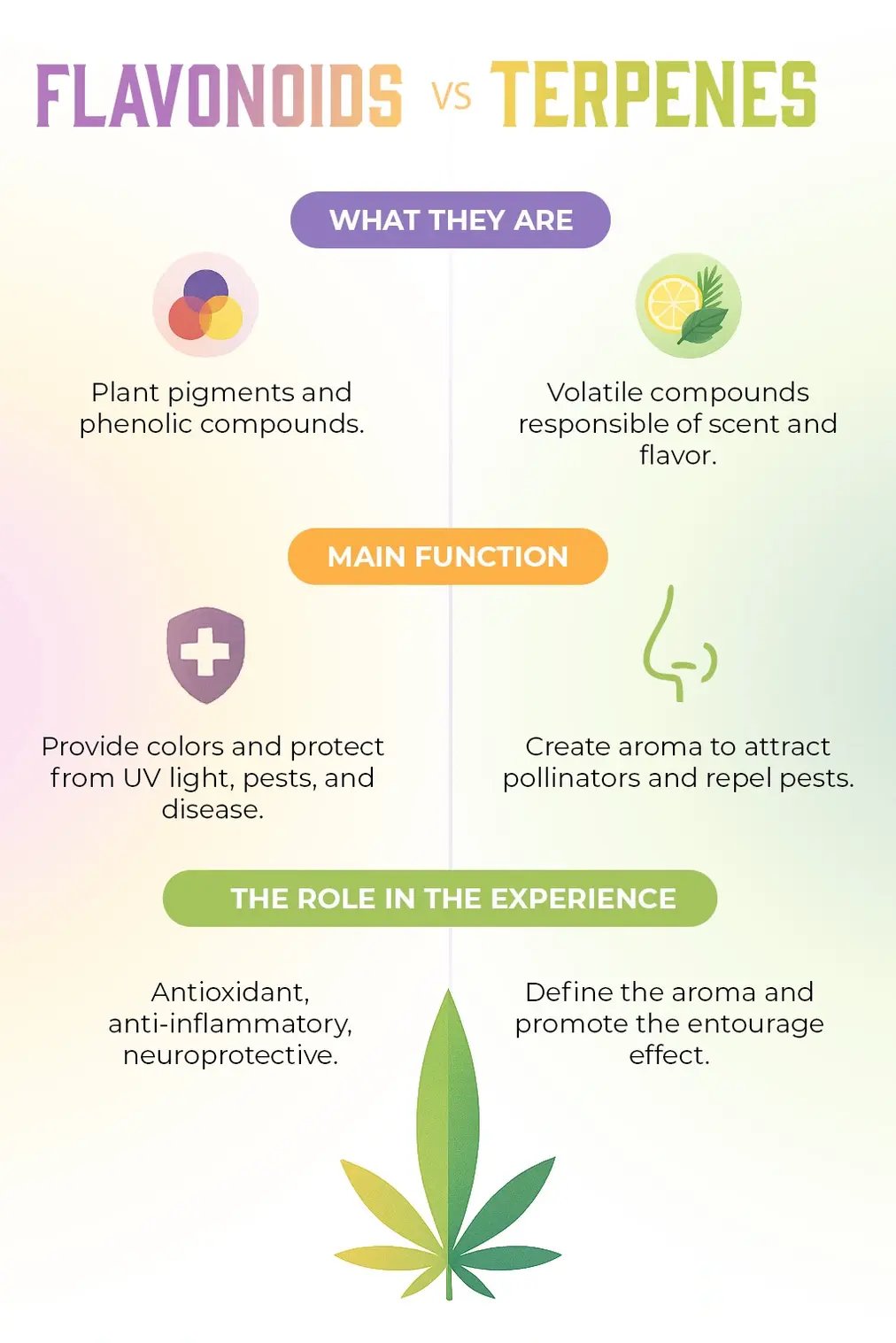
Scent vs. Substance
- Terpenes are the aroma and flavour
- Flavonoids are the colour and deeper therapeutic compounds.
While both contribute to a strain’s sensory profile and are essential for the entourage effect, flavonoids are now being recognised for their potential to provide a broad range of physiological benefits. This is a crucial distinction for both consumers and medical patients.
What to expect from Flavonoids in the future?
An increasing body of research work and the surprising findings it is producing, such as the Stellenbosch University study, is a reminder of the remarkable chemical complexity of the cannabis plant.
A plant on which the focus, for almost a 100 years (during the 20th century and the first decade of the 21st century), was purely a vehicle to ‘get high’ is showing exciting plant-based medicine potential as research unlocks its special qualities.
Studies into flavonoids are also a reminder that cannabis growers and consumers could be missing out on potential benefits by only concentrating on those big buds!