
Cannabis molds and fungal pathogens come in various forms, and each has the potential to ruin a harvest and present health risks if consumed. Controlling climate and environmental conditions is the best defense against mold in both indoor and outdoor setups.
This guide details common cannabis molds, how to identify them, and how to treat and prevent fungal infections.
Contents
Common Types of Cannabis Mold
1. Botrytis (Gray Mold / Bud Rot)
Botrytis, commonly known as bud rot, is the most prevalent fungal infection affecting cannabis plants. It thrives in high-moisture environments, clinging to wet surfaces and entering through plant wounds or dense foliage.
- Behavior: Botrytis releases millions of microscopic spores that travel through the air or water. Because it starts inside dense buds, it is often difficult to detect until significant damage has occurred.
- Appearance: Appears as a grayish-brown, fuzzy mold deep within the flowers. Early signs include discolored, brownish-gray patches on buds (similar to bruised fruit) or a single dead, dry-looking sugar leaf protruding unexpectedly from a healthy-looking bud.
- Target: It particularly targets large, dense cola tops.
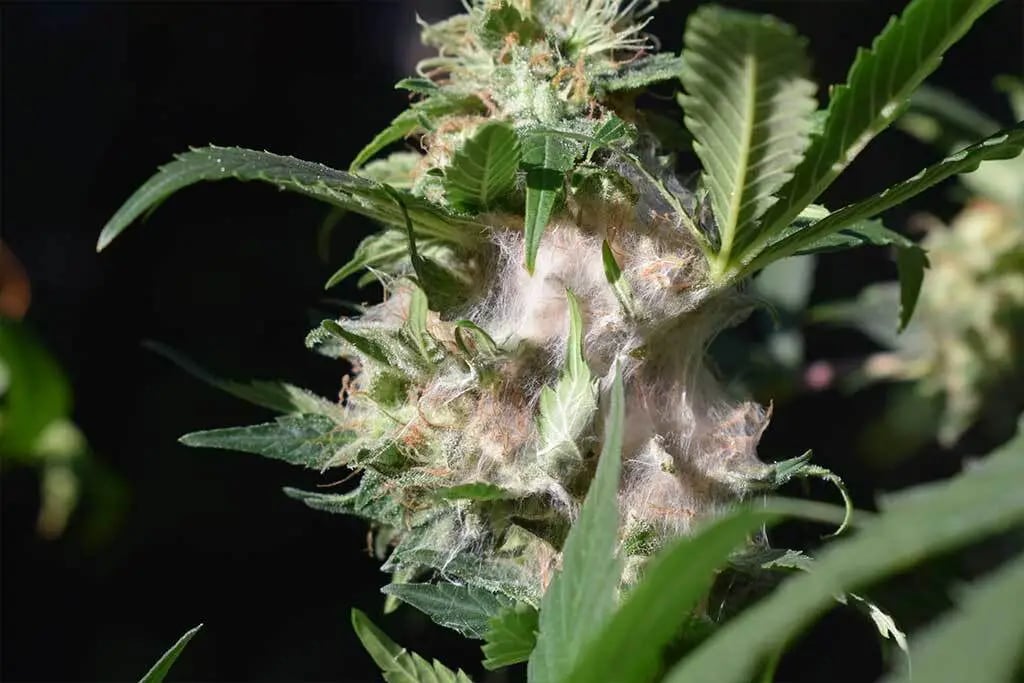
What to Do If Botrytis Is Detected
- Act Immediately: Botrytis spreads rapidly. Sterilize a pair of scissors and carefully cut out all infected sections, ensuring you do not knock spores onto surrounding healthy buds.
- Dispose Safely: Destroy all infected tissue away from the grow area.
- Assess Harvest Timing: Monitor remaining plants closely. If humidity cannot be lowered or mold continues to spread, consider harvesting early to save the rest of the crop.
Early Detection: The “Grey Leaf” Warning Signal
Bud mold is extremely stealthy in dense flowering cola clusters. Before entire buds turn brown or mushy, watch for tiny leaf tips protruding from the buds that suddenly turn a dull greyish color. This is often the very first visual cue that mold has taken hold inside the bud structure.
- Daily Audits: Inspect dense colas daily during the final 4–6 weeks of flowering using a jeweler’s loupe or magnifying glass.
- Strategic Airflow: Perform light defoliation and lollipopping around the base and interior of the plant during early flowering to prevent stagnant, high-humidity air pockets.
- Late-Stage Water Management: Whether growing indoors or out, overwatering during late flowering increases ambient canopy humidity. If high humidity or heavy rain is expected near harvest, reduce soil watering. Following your final flush, allow the growing medium to thoroughly dry out.
- The Pragmatic Harvest Choice: If environmental conditions worsen (such as an unfixable spike in tent humidity or a week-long rain forecast outdoors) right near maturity, consider harvesting a week early. Cutting early preserves 90% of a clean, healthy yield, whereas waiting risks losing the entire crop to Botrytis.
2. White Powdery Mildew (WPM)
White Powdery Mildew is a systemic fungal issue that thrives in grow spaces with high relative humidity. It affects plants during both the vegetative and flowering stages, causing leaves to discolor, dry out, and wilt.
- Appearance: WPM looks like a dusting of flour or powdered sugar scattered across leaf surfaces. It starts as light white spots and can quickly expand to cover entire leaves.
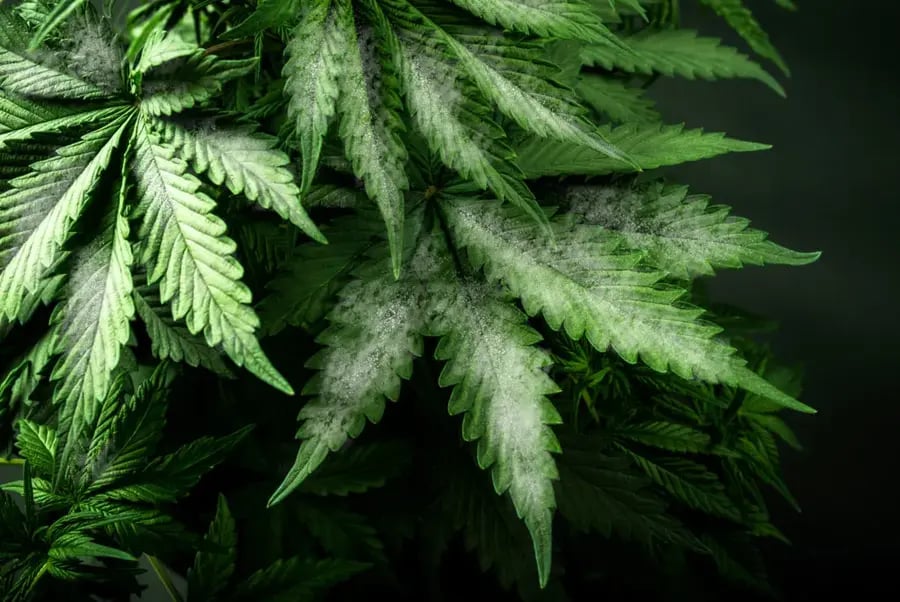
What to Do If White Powdery Mildew Is Detected
- Prune Affected Leaves: Carefully remove heavily infected foliage to prevent spores from blowing across the canopy.
- Lower Humidity: Reduce relative humidity in the grow space to below 50%.
- Improve Airflow: Increase canopy air movement using oscillating fans, and prune lower non-essential leaves to improve ventilation.
3. Downy Mildew
Unlike WPM, Downy Mildew establishes itself primarily on the undersides of leaves, making it harder to catch early. It thrives in cool, humid environments and is especially common in outdoor gardens during wet summer months.
- Appearance: Spores create white, gray, or yellow patches on leaf undersides with a lichen-like texture. As the infection progresses, the top side of the leaf develops yellow spots with brown center markings.
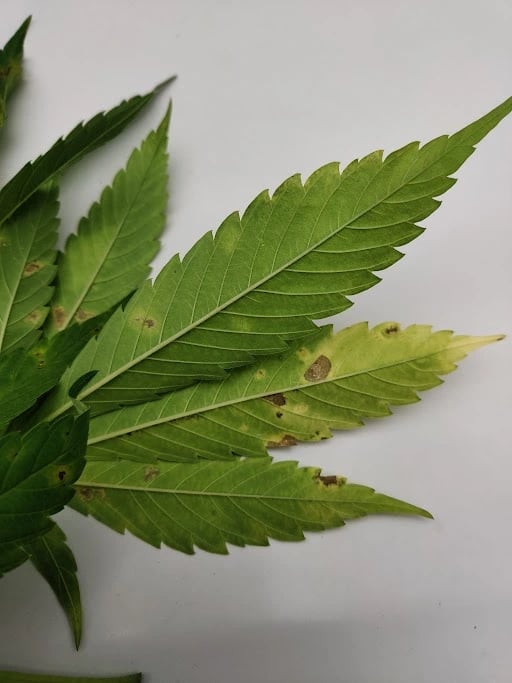
What to Do If Downy Mildew Is Detected
- Isolate/Remove: Strip affected leaves carefully. In severe cases, remove the entire infected plant from the garden area.
- Control Microclimate: Lower room humidity, boost canopy airflow, and apply organic preventative sprays during vegetation if growing outdoors.
4. Aspergillus
Aspergillus is a toxic mold species that thrives indoors when high humidity, temperature fluctuations, and poor ventilation combine. Consuming cannabis contaminated with Aspergillus poses severe health risks.
- Appearance: Aspergillus is difficult to visually identify on a casual inspection. Tell-tale signs include a musty or earthy odor coming from the plants, accompanied by unexplainable leaf yellowing or browning (often mistaken for nutrient burn or deficiency).
- Storage Risk: Aspergillus can also develop in wet buds during the post-harvest curing phase if moisture is not carefully managed.
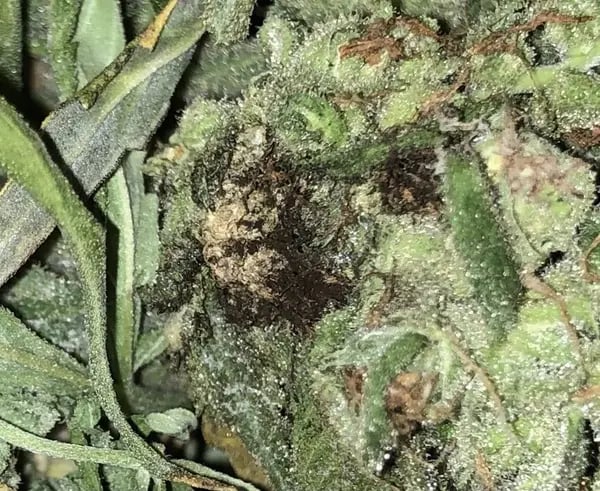
What to Do If Aspergillus Is Detected
- Destroy Affected Plants: Do not attempt to process or smoke cannabis infected with Aspergillus.
Environmental Conditions: Prevention Strategy
Controlling your microclimate is your absolute best defense against fungal outbreaks.
| Conditions Mold Loves | Conditions Mold Hates |
|---|---|
| • Poor air circulation / stagnant air | • Active canopy airflow (oscillating fans) |
| • Surface moisture sitting on foliage | • Clean grow areas free of plant debris |
| • Sustained relative humidity (> 60%) | • Low relative humidity during late bloom (< 40%) |
Ideal Humidity (RH) Targets by Stage
- Vegetative Stage: 60% – 70% RH
- Early Flowering: 40% – 50% RH
- Late Flowering (Crucial for Botrytis prevention): Below 40% RH
Genetic Resistance
Controlling humidity outdoors is tough, which makes seed selection your most important line of defense. If you grow in a region with wet autumns or high humidity, start with genetics bred to fight off fungal spores.
Strain Selection Tip: Explore our curated list of the Top 5 Mold Resistant Cannabis Strains for Outdoor Growing to keep your garden safe.
Canopy Training & Outdoor Protections
Physical adjustments to your canopy architecture significantly reduce mold risk by eliminating pockets of trapped moisture.
Canopy Sculpting (LST, Lollipopping & Mainlining)
Massive, dense top colas are primary targets for Botrytis. Use plant training techniques like LST (Low-Stress Training), lollipopping, or mainlining early in growth to develop a wider, open canopy with multiple medium-sized colas rather than a single massive central bud. This improves airflow between branches and ensures that if one small bud catches mold, the rest of your harvest stays intact.
Outdoor Rain Shields
Heavy autumn rainfall right before harvest is the ultimate trigger for bud rot.
- Potted Plants: Move potted outdoor crops under cover or into a greenhouse during multi-day rainstorms.
- Ground-Planted Crops: Construct protective covers using garden canes and clear plastic sheeting to keep direct rain off flower structures while maintaining open side ventilation.
Homemade Organic Mold Treatments (Veg Stage Only)
For prevention or early-stage treatment during the vegetative stage, simple home remedies can alter leaf pH or introduce natural enzymes to suppress fungal growth.
1. Milk Spray Treatment
Milk contains beneficial compounds and potassium phosphate that help boost plant defenses and kill micro-organisms on leaf surfaces.
- Recipe: Mix 90–100 ml of milk per 1 liter of water.
- Note: Keep solutions light; heavy milk residues on flowering plants can accidentally promote botrytis.
2. Bicarbonate of Soda (Baking Soda) Spray
Baking soda increases the pH on leaf surfaces, creating an alkaline environment inhospitable to fungal spores.
- Recipe: Mix 1 tablespoon of bicarbonate of soda per 1 liter of water.
Health Warning: Never smoke or consume moldy cannabis buds. Inhaling fungal spores or toxic molds like Aspergillus carries severe respiratory health risks.
3. Apple Cider Vinegar (ACV) Spray
Diluted vinegar creates a mild acidic environment that halts early-stage mildew colonization.
- Recipe: Mix 4 tablespoons of Apple Cider Vinegar per 3 liters of water. Do not exceed this ratio, as concentrated acetic acid can cause leaf burn.
4. Natural Yoghurt Soil Drench
To support soil microbiology and boost plant systemic resistance against root-level pathogens:
- Recipe: Mix 2 tablespoons of plain natural yoghurt per 3 liters of water and apply to the root zone once in early autumn.
Summary
Managing mold comes down to environmental control. Consistently monitor humidity, maintain strong airflow across the canopy, prune dense growth, and select naturally mold-resistant strains if growing in wet or humid climates.
Troubleshooting insects or leaf-chewing pests rather than mold? Check out our complete Cannabis Pests Identification & IPM Guide.