

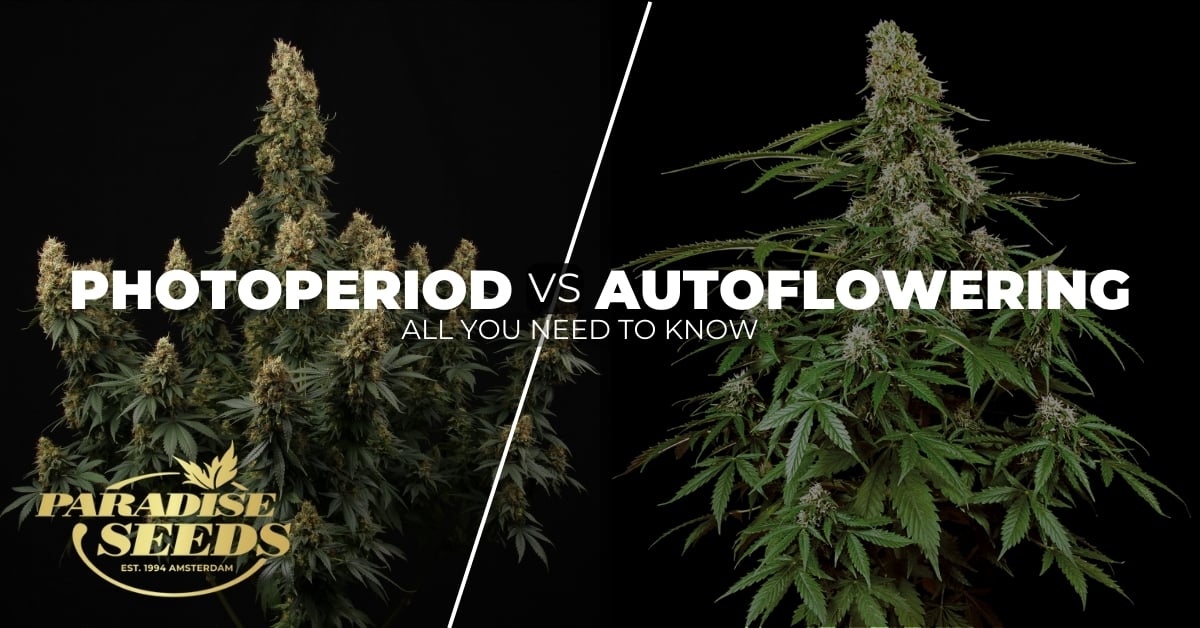
The ever-evolving cannabis industry offers growers a crucial decision: should they choose photoperiod or autoflowering seeds? The photoperiod vs autoflower debate among cannabis cultivators is ongoing, based on various factors, each with unique advantages and disadvantages. This article takes a closer look.
Contents
The first autoflowering strains were heavily criticized by growers for their lower yields and potential despite being easy to grow and fast developing. However, continuous breeding has significantly improved these varieties.
Therefore, it’s time to revisit this debate and explore the characteristics, benefits, and drawbacks of both photoperiod and autoflowering cannabis strains, helping you make an informed decision for your next growing experience.
Photoperiod Cannabis Plants
To consider the photoperiod vs autoflower questions, let’s take a look at what the terms mean.
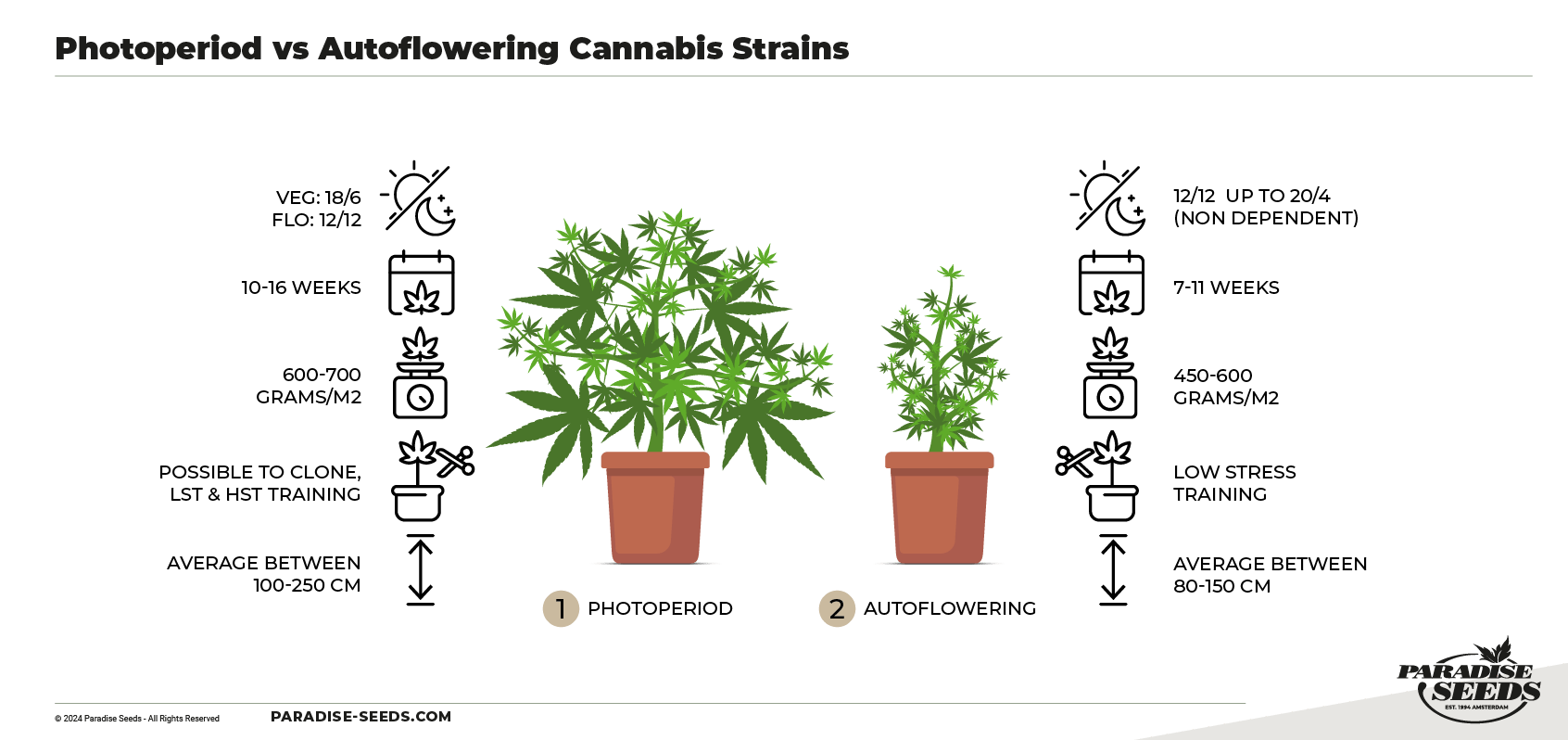
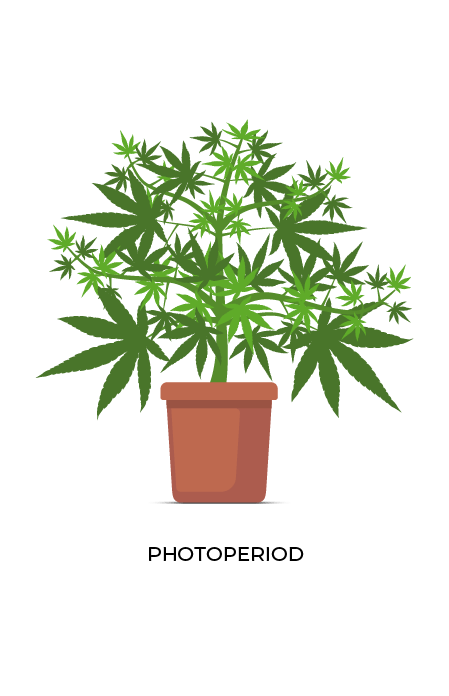
Photoperiodism can be defined in plants as the capacity to detect and adapt to seasonal changes in day length. Most cannabis plants are considered short-day plants, meaning they bloom only when the day is less than 12 hours. Therefore, the photoperiod is a crucial factor for their yields. These plants go through two distinct phases in their life cycle: vegetative growth and flowering.
The vegetative phase occurs when the plants receive approximately 18 hours of daily light and is characterized by the growth of roots, leaves, and branches. Outdoors, the flowering phase and the production of buds begin when the nights exceed a critical photoperiod of 12 hours, typically during late summer in the Northern Hemisphere.
However, the length of the dark period required to induce flowering may vary among different strains and varieties of the cannabis plant.
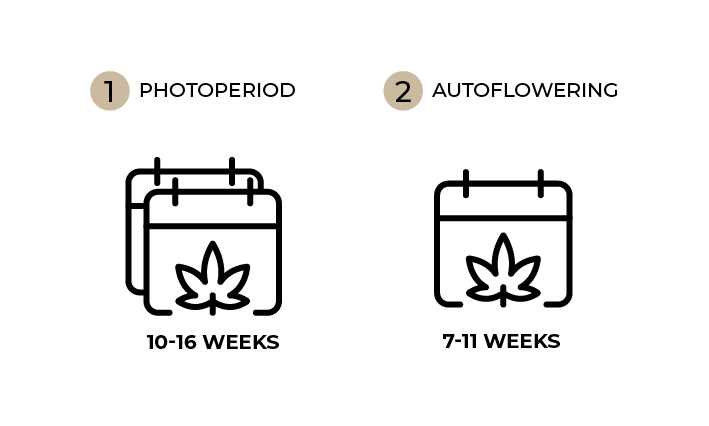
In the past, photoperiod plants took longer to reach full maturity. While many classic photoperiod varieties can still take up to 12-16 weeks to grow (especially sativas), there are now strains that can be harvested in less than ten weeks from seed – check Wappa or Mendocino Skunk, for example.
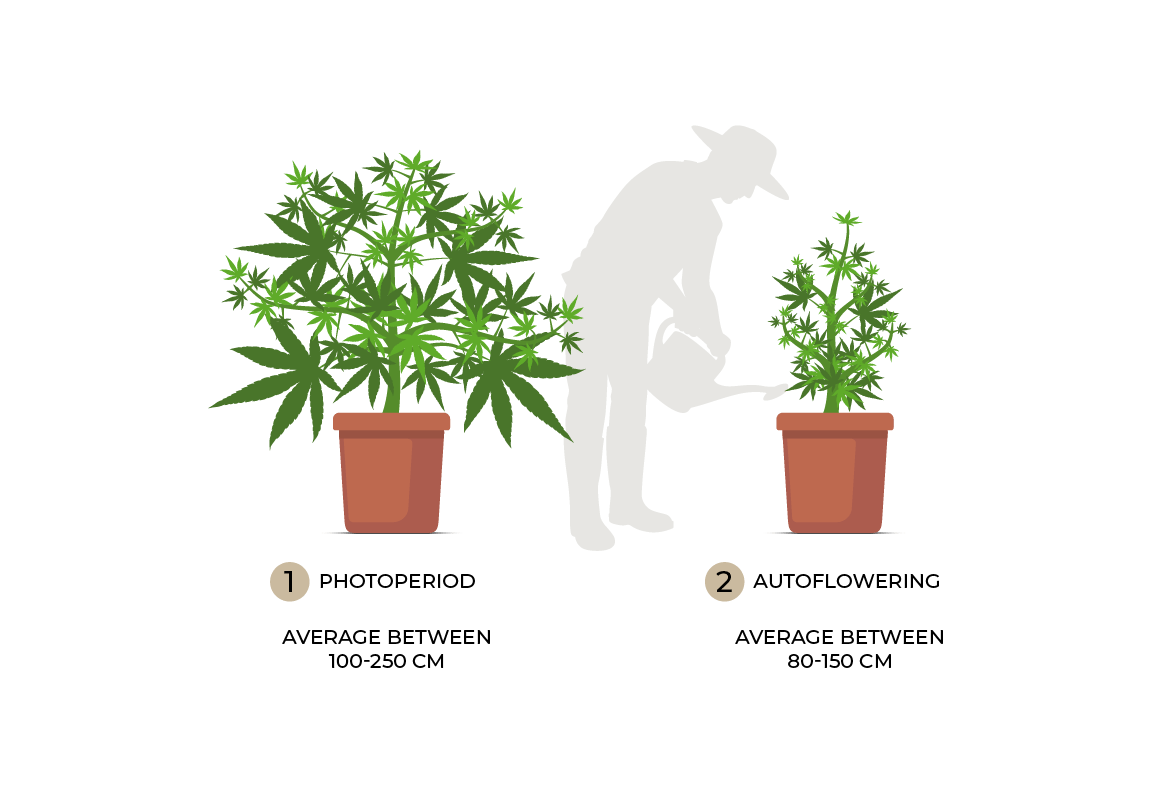
Photoperiod plants can develop and show their full potential in an ample growing space. These varieties typically grow larger than autoflowers, which also means that they have more bud sites and can support the weight of big yields.
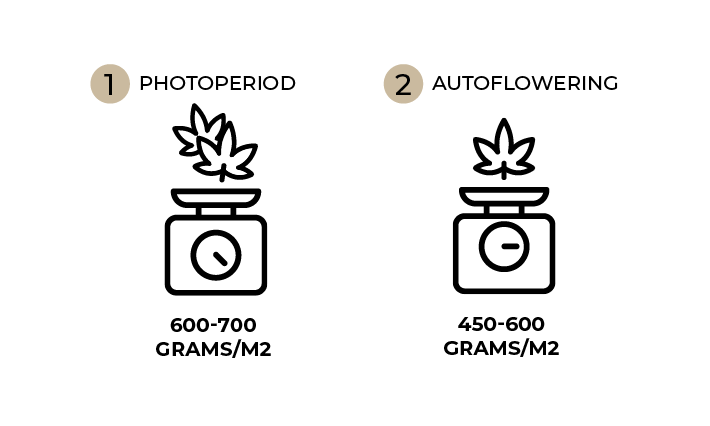
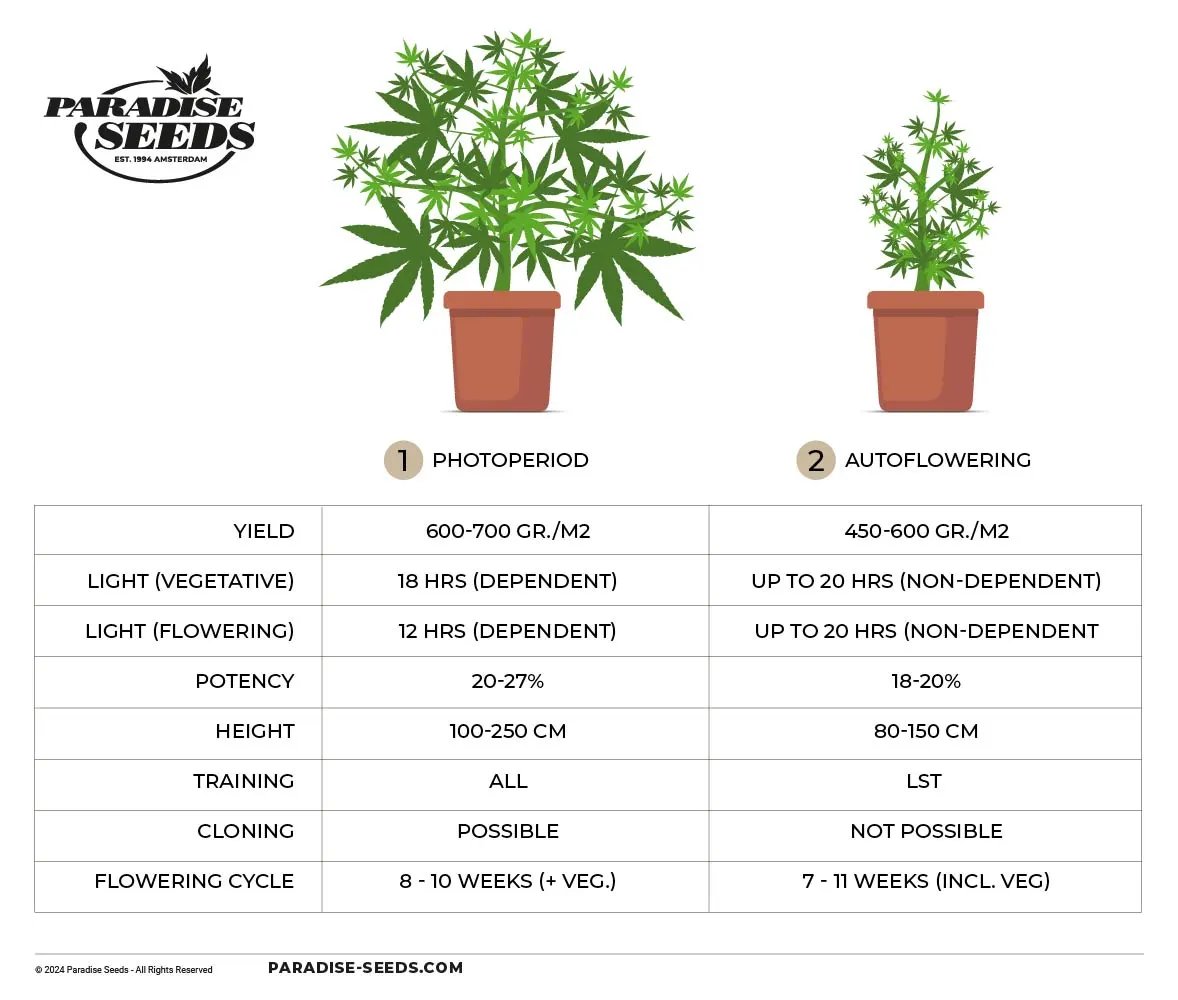
Although autoflowers are starting to catch up, bigger crops are still expected from photoperiods. On average, a high-quality photoperiod plant, such as Caramba produces 600-700 grams/m2, while a high yield autoflower such as Stromboli may yield around 550/grams per square meter. Therefore, you should still consider photoperiod crops if your primary focus is high yields.
In addition to high yields, potency may tip the scales toward photoperiods for many growers. Although some autoflowers can reach THC levels of up to 20%, the highest potency is still expected from photoperiods, including other cannabinoids.
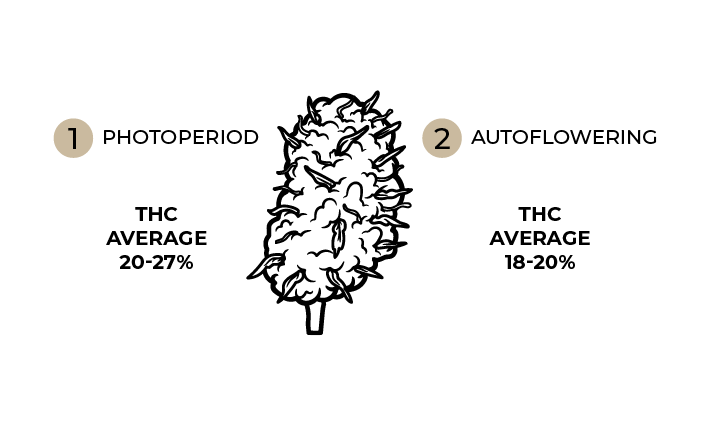
When growing photoperiod seeds, the correct use of light is one of the primary keys to ideal results. After determining the timing of light cycles, it is essential to carefully monitor for “light leaks” before transitioning to a 12/12 lighting schedule. These leaks can disrupt the timing of the lighting schedule and cause stress for your plants. In a worst-case scenario, this stress can result in hermaphroditism. To avoid this, always ensure that there are no light gaps in your grow room or tent.
Indoor photoperiod crops are highly versatile and can be managed efficiently to increase their yield. During the vegetative stage, Low Stress Training (LST) and High Stress Training (HST) techniques can be applied to manage the plant structure. However, these techniques are less effective for autoflowers given the limited time frame of the vegetative stage.
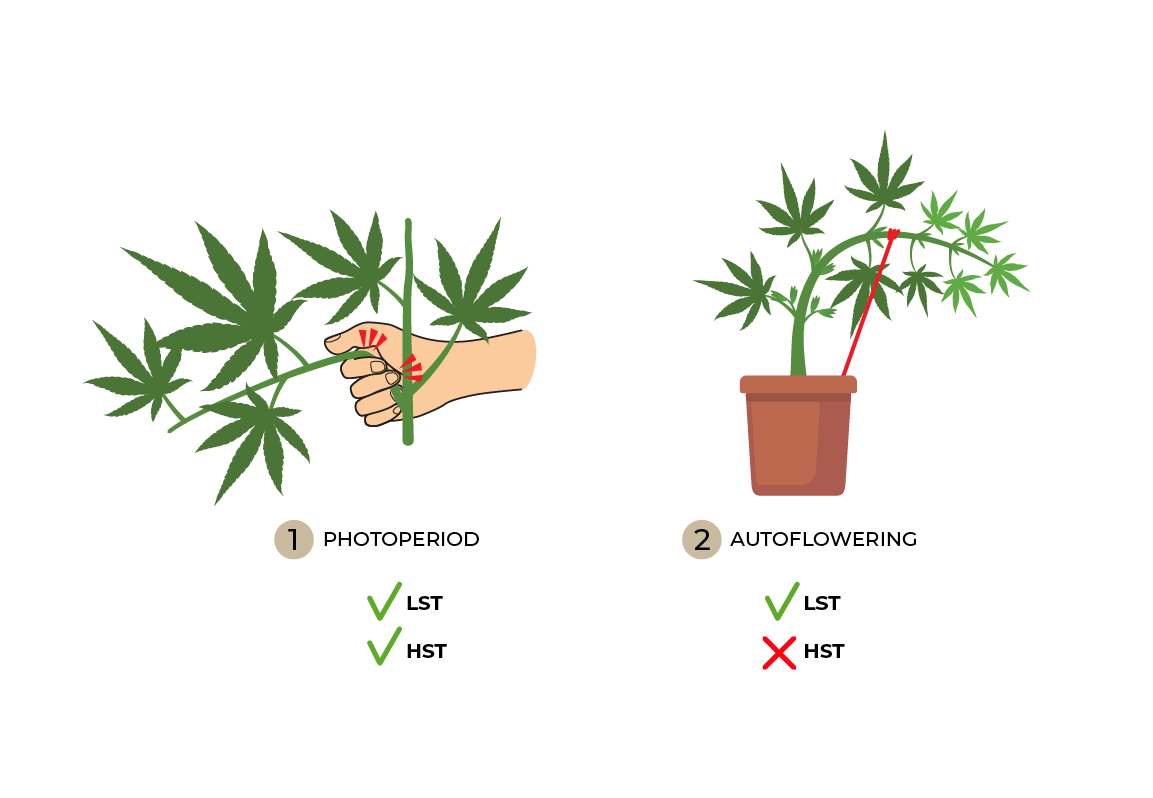
LST involves gently manipulating the branches to encourage horizontal growth and promote even bud development while optimizing light exposure. On the other hand, HST is a more aggressive approach that involves removing parts of the plant to stimulate lateral growth.
Photoperiod varieties have the great advantage of clonability. If one of your specimens combines everything you want from a cannabis plant, you can clone it to enjoy the desirable traits in later plants.
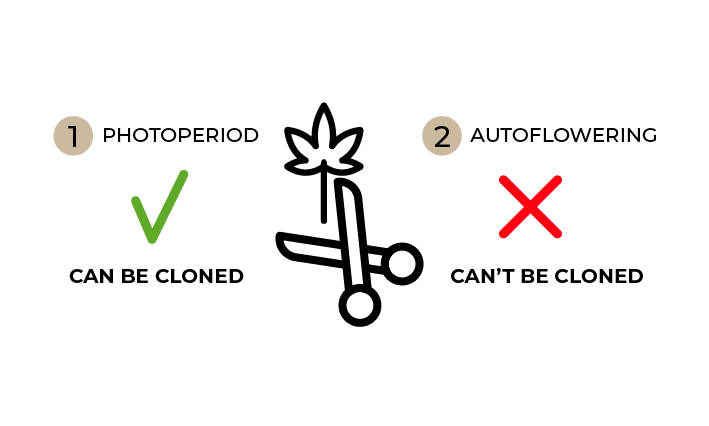
Another method to maintain the genetic line of a photoperiod plant is by using the re-vegging technique. The primary objective of this technique is to return the plant to its vegetative state, which helps produce new growth much faster. This process ensures the continued success of the desired genetics.
Autoflowering Cannabis Plants
Autoflower cannabis seeds, on the other hand, bypass the need for specific light cycles and flower automatically after 4-5 weeks of growth. This characteristic offers unique advantages for growers.
Firstly, there is no need to worry about appropriate lighting as the plants will thrive even with only 8-12 hours of light per day. However, providing 16-20 hours of light will result in higher yields. Still, if you plan to grow your plants outside on your balcony to let nature take its course, autoflowering seeds are the way to go.
Autoflowering plants tend to grow faster than photoperiods. Some autoflower strains like Vertigo or Pandora can be harvested just 8-9 weeks after germination. The best thing about autoflowers is that you can grow multiple harvests yearly, even outdoors!
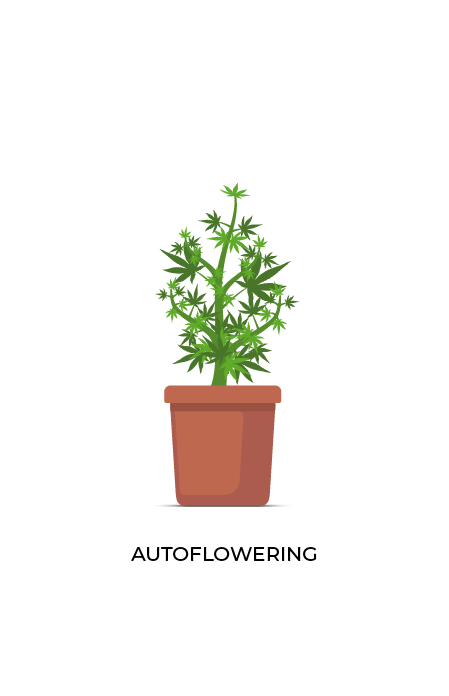
Depending on the strain and weather conditions, you can start growing them outdoors in May. If you grow cannabis in the northern regions with short summers and varied climates, autoflower seeds will be your obvious choice.
Autoflowers are genetically smaller than photoperiod plants, which provides a valuable benefit for most growers. On average, they grow to be around 1-1.5 meters tall. This means that you will require less vertical height in your grow room. Additionally, you can easily hide them from curious onlookers when growing outdoors.
However, growing healthy and potent automatic strains can be challenging due to their short vegetative growth phase. While some believe that growing autoflowering seeds is as easy as taking care of any indoor plant and providing sufficient water and sunlight, it is more complex than it sounds. Ensuring optimal growth during the first few weeks of cultivation is crucial and requires proper care, including moderate temperature, adequate water, and sunlight.
As flowering starts within a few weeks, regardless of growing conditions, mistakes made early on can take their toll. If the plant experiences stress in the first few weeks, it will not have enough time to recover before flowering, resulting in a lower yield.
On the other hand, autoflowers cannot be used for cloning. Technically, it is possible to clone them, but the resulting plant will be the same age as the mother and will start flowering immediately without any meaningful yield. The same applies to re-vegging: autos cannot be reverted to an earlier growth phase due to their internal clock.
Autoflowering plants have the advantage of not requiring changes in light cycles. However, if you want to see spectacular results in a short period, this can also be a disadvantage.
The minimum recommended light cycle is 12/12, but for the best results, 16-20 hours of light per day is suggested, which can strain your wallet. However, the high energy consumption can be offset by autoflowers being ready to harvest faster than photoperiod crops.
Photoperiod vs autoflower cannabis strains pros and cons
Pros of photoperiods
- Higher yield potential, especially indoors. Because you control when flowering begins, you can extend the vegetative phase to build a larger, more branched plant with more bud sites. A well-trained photoperiod plant in an optimal indoor setup regularly produces 500–700 g/m², outpacing even the best autoflowers when conditions are dialled in.
- Full control over your grow timeline. If your plant has a rough start (think a transplant stress, a pest problem, a heat spike) you can hold it in veg until it recovers fully before triggering flower. That flexibility is a real safety net that autoflowers simply don’t offer.
- Cloneable and re-veggable. Find a phenotype with exceptional structure, flavour, or potency? You can take cuttings and preserve those exact genetics indefinitely. You can also re-veg a harvested plant back into growth, useful for breeders and growers who want to extend a particularly successful run.
- Responds well to advanced training. Techniques like FIM and topping, LST, SCROG, and lollipopping all work best with photoperiods, because the extended veg phase gives the plant time to respond and recover before flowering locks in the structure. Done well, training can dramatically increase yield per square metre.
- Higher THC ceiling and broader cannabinoid expression. The most potent cannabis strains available are still photoperiod genetics. While modern autos have improved dramatically, the very top end of THC expression, and the complexity of full cannabinoid and terpene profiles, continues to favour photoperiods.
Cons of photoperiods
- Longer time from seed to harvest. Most photoperiod plants take 4–5 months from germination to harvest when you account for a proper veg phase. Fast strains can do it in under 10 weeks of flowering, but even those require additional veg time, making a total grow cycle of 3+ months the realistic minimum.
- Requires strict light management indoors. Switching to a 12/12 light schedule is straightforward, but any light leak during the dark period (a timer fault, a crack in the tent) can stress the plant and in worst cases cause it to hermaphrodite. You need to be diligent about your grow space before flipping.
- Deciding when to start flowering takes experience because growers must judge the plant’s size, health, and expected stretch before changing the light cycle. Switching too early can reduce yields, while switching too late can cause plants to outgrow the space.
- Takes up more space. Photoperiod plants can grow very large, which is great for yield but challenging in tight spaces (not ideal for stealth growing). Height, canopy management, and airflow all become more complex compared to the naturally compact autoflower.
- Less suited to short outdoor seasons. In extreme northern latitudes where summer is brief, many photoperiod strains, particularly sativa-dominant varieties, won’t finish before the autumn frosts arrive. Growers in Scotland, Scandinavia, or Canada often find their only outdoor option is to choose early-finishing strains specifically or switch to autoflowers.
Pros of autoflowers
- Fast seed-to-harvest, regardless of season. Most modern autoflowering strains are ready to harvest 8–10 weeks from germination. Outdoors, this means you can start a crop in May and have it finished by July, then run a second or even third crop before autumn. That speed is unmatched by any photoperiod strain.
- No light schedule management needed. Autoflowers flower based on age, not darkness. Light leaks, timer failures, and schedule changes that would stress a photoperiod plant have no impact on autoflowers. This makes them far more forgiving for beginners and much better suited to improvised or outdoor grows.
- Compact and discreet. At an average of 60–100 cm indoors, autoflowers fit comfortably into small tents, narrow cupboards, and outdoor spots where a 150 cm photoperiod plant would be immediately visible. For growers where discretion matters, this size advantage is significant.
- Multiple harvests per year outdoors. In a typical northern European growing season, a photoperiod plant gets one harvest. An autoflower grower can get two or three. Stagger your germination dates by 4–5 weeks and you can maintain a rolling outdoor harvest from June through October.
Cons of autoflowers
- Lower per-plant yield ceiling. Even the best modern autoflowering strains typically produce less per plant than a well-trained photoperiod given comparable space and conditions. The gap has narrowed significantly. Top autoflowers now hit 400–550 g/m², but for growers focused purely on maximising output per square metre, photoperiods still have the advantage.
- Less margin for error early on. Because autoflowers begin flowering automatically after 3–4 weeks regardless of what’s happened to them, mistakes in the early seedling stage (overwatering, nutrient burn, root stress from transplanting) compress directly into the final yield. There’s no opportunity to hold the plant in veg until it recovers. Getting the first few weeks right is critical.
- Can’t be cloned meaningfully. You can take a cutting from an autoflower, but the resulting clone will be genetically the same age as the mother plant and will begin flowering almost immediately, producing very little. Each grow requires fresh seeds, which matters both for cost and for preserving a particularly good phenotype.
- High light consumption for best results. To get the most from an autoflower, you want 18–20 hours of light per day throughout the entire grow cycle. Unlike photoperiods that switch to 12/12 during flower (reducing electricity costs in that phase), autos stay on long light cycles the whole time. Running 20 hours of light for 9–10 weeks adds up, which is worth factoring into your running costs.
Which should you choose? Photoperiod vs autoflower at a glance
Neither type is universally better. The right choice depends on your setup, experience level, and what you want from your harvest. Here’s how to decide quickly.
Choose autoflowering seeds if:
- You’re growing for the first time. Autos don’t require you to manage light schedules or worry about accidentally triggering early flowering, they handle that themselves. You can focus entirely on keeping the plant healthy.
- You want multiple harvests per year outdoors. Because autos finish in 8–10 weeks from germination regardless of season, you can run two or even three outdoor harvests between spring and autumn (something impossible with photoperiods).
- You have a small or restricted growing space. Most autoflowering plants top out at 60–100 cm indoors, making them ideal for grow tents, cupboards, or discreet balcony grows where height is a constraint.
- You’re growing in a northern climate with a short summer. In regions where outdoor seasons are brief or unpredictable, autoflowers will finish before the first frost where photoperiods often won’t.
- Speed matters more than maximum yield. If you need a fast turnaround (or you simply don’t want to wait four months) autos will get you to harvest in roughly half the time.
Choose photoperiod seeds if:
- You want the highest possible yield. Photoperiod plants can be kept in the vegetative stage for as long as you need, building a much larger plant structure (and more bud sites) before you trigger flowering. For growers chasing large harvests, photoperiods still have the edge.
- You want to clone or preserve genetics. If you find a plant that’s exactly what you want (great structure, exceptional potency, ideal flavour) you can take cuttings and replicate it indefinitely. Autoflowers can’t be meaningfully cloned.
- You’re an experienced grower who wants full control. Photoperiods respond well to advanced training techniques like topping, LST, HST, and SCROG. The extended vegetative phase gives you time to correct mistakes and shape the plant before it flowers.
- Potency is your top priority. The highest THC expressions in cannabis are still found in photoperiod genetics. While modern autos have closed the gap considerably, the ceiling remains higher for photoperiods.
- You’re running an indoor room with a dedicated mother plant setup. Perpetual harvests, breeding projects, and mother rooms all rely on the clonability and re-vegging capability that only photoperiod plants offer.
Do Autoflowers occur in nature?
Though autoflowering genetics are inherited from nature, they are not initially a feature of sativas and indicas. Some growers have avoided autoflowers because their genetics are considered to be different from classic cannabis, leading some to believe that they could never be as good as the original. To disprove this image, it’s worth taking a look at the history of autos.
In the past, some cannabis seeds migrated from Central Asia to Russia and Siberia, close to the Arctic Circle, where summers are shorter and colder. However, the photoperiod plants that relied on seasonal changes in sunlight exposure struggled to mature in time due to the harsh environment. The plants that survived adapted and developed genetic mutations, which allowed them to flower quicker and earlier when they reached a certain age, regardless of the number of sunny hours they received. This cannabis species is known as ruderalis. In the early 21st century, breeders combined ruderalis genes with indica and sativa plants to create the first commercially available autoflowering seeds.

Through two decades of selective breeding, early low-yielding and low-potency autoflowering plants have become almost as productive as photoperiod strains. In terms of cannabinoid profile, they have also caught up firmly with their indica and sativa ancestors.
Many of the top-selling cannabis strains are the result of combining desirable qualities. Just like how we consider cross-bred fruits like Jonagold apples natural, the same applies to autoflower varieties with ruderalis and sativa/indica ancestors.
Final Thoughts
In the dynamic landscape of cannabis cultivation, it is inevitable that the photoperiod vs autoflower cannabis strains discussion endures. However, as this article shows, each has its distinct merits. The continuous advancements in autoflowering seeds have disrupted the traditional debate, offering growers unique advantages such as speed, adaptability, and multiple harvests.
While photoperiod strains boast clonability and potential for larger yields, the ongoing popularity of autoflower strains suggests a growing acceptance among cultivators for their ability to combine desirable traits. Still, if you’re primarily motivated by high yield and outstanding potency, usually a photoperiod strain is a better choice.
Ultimately, deciding between photoperiod and autoflowering seeds depends on individual preferences, cultivation goals, and environmental considerations. Whether opting for the clonability and potentially larger yields of photoperiods or the speed and adaptability of autoflowers, growers now have diverse options to suit their specific needs and circumstances.