

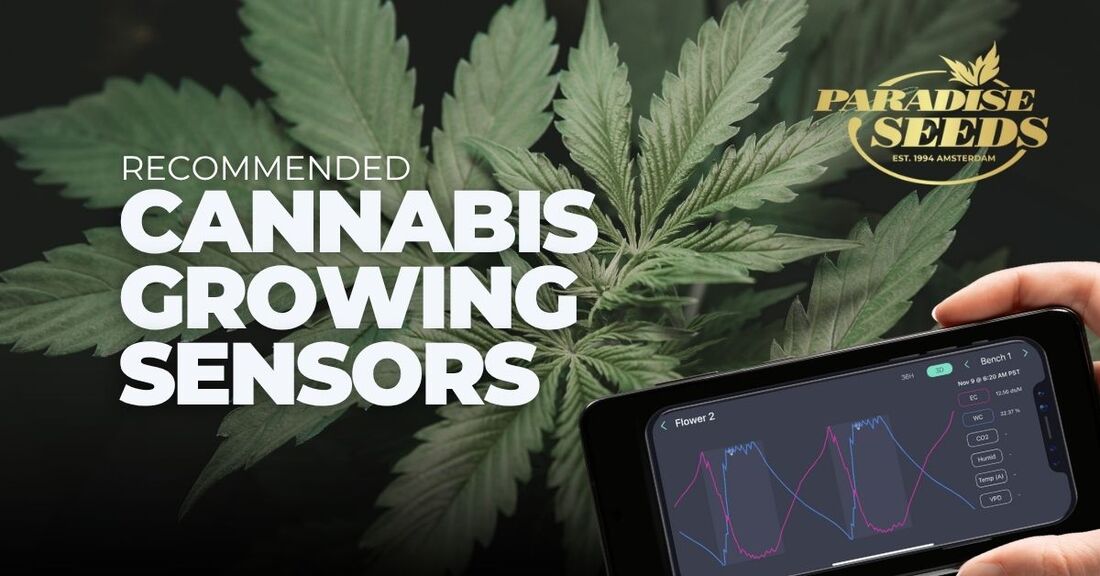
Today, digital tools and computer systems are common in many fields, including traditionally manual tasks like cultivation, especially when the focus is on crop vitality and high yields. This is especially true for cannabis cultivation, where the focus is on healthy plants and high yields.
Contents
Once primarily used in professional commercial operations, sophisticated cannabis growing sensors have now become standard tools for many home growers. They help maintain optimal growing conditions and alert growers to potential issues such as high temperatures, low humidity or improper pH levels.
These sensors are often moderate investments that quickly pay for themselves after a few successful grows. Their widespread adoption is no coincidence; these devices significantly impact the cannabis industry as a whole.
Why Cannabis Growing Sensors Are Critical for Successful Cultivation
If you’ve ever attempted to grow cannabis, you know that numerous mistakes can easily occur throughout the process, often leading to frustration and discouraging further experimentation. With sufficient experience, many of these errors can be avoided with some care.
However, using specific gadgets can significantly reduce the need for constant monitoring and greatly enhance the results. In this detailed companion article You can find out more about how cannabis sensors work.
Both medical and recreational cannabis sellers need consistency in quality and quantity. Producers must deliver reliable yields to get their products on store shelves while keeping key components like cannabinoids, terpenes, and flavonoids at stable levels, especially for medical use. Achieving this consistency requires following strict protocols, which is hard to do without sensors to monitor growing conditions.
While not all tools are necessary for home cultivation, using a few sensors for cannabis growing can help identify potential hazards early on. This proactive approach can greatly enhance a grower’s awareness and competence.
By gaining valuable insights into their cultivation practices and observing how slight variations in environmental values can impact results, every grower can improve their overall productivity.
What Sensors Do You Need For Indoor Growing?
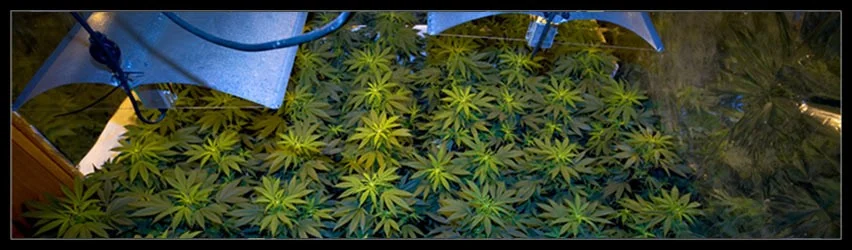
The primary advantage of indoor growing is complete control over the growing environment. This includes selecting the suitable soil and nutrients, equipment and lighting.
While this allows the grower to create the ideal conditions for your plants, it also presents a significant challenge, as you must monitor and manage all the equipment throughout the process and intervene when necessary. Let’s explore how sensors for cannabis growing can assist you with this.
Temperature Sensors
The ideal temperature for vegetative and flowering is a range between 24 – 27°C, with the most challenging aspect, maintaining this climate consistent. Temperature control is a crucial aspect of climate settings management in the growing space, as it directly impacts Relative Humidity, which is also vital for plant health.
Therefore, using sensors to verify the accuracy of thermometer readings at various points around the plants can be beneficial. It’s important to note that if a lamp is positioned too closely or is too strong compared to the growing medium, it can generate excessive heat in the upper parts of the plant, negatively affecting growth.
Relative Humidity Sensors
The importance of adequate humidity in plant life cannot be overstated. It is crucial for nutrient uptake and respiration, contributing to overall vitality. But too High humidity levels can lead to pests, mold, and various diseases.
During the vegetative period, humidity levels should be maintained between 50% and 70%. This range and higher temperatures ensure that plants receive enough moisture for adequate nutrient absorption and growth.
In the flowering phase, humidity should be gradually reduced to 40% and 50% to prevent disease and encourage flower development.
For more experienced growers, with the right setup, knowledge and good plant health, a 10% higher RH of can be justified. The above setpoints are safer, and will reduce risk.
Humidity sensors track moisture levels in the air and provide real-time data to help prevent problems like mold and mildew, which can flourish in high-humidity environments.
PH and EC sensors
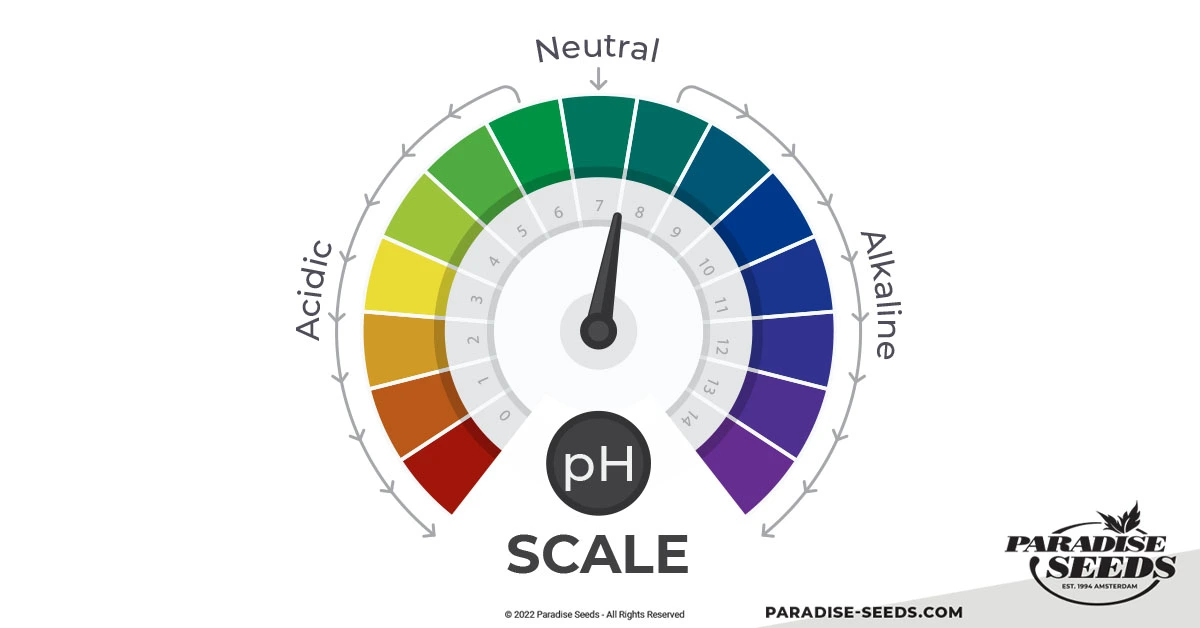
The pH value measures the acidity or alkalinity of a substance on a 14-point scale, with 7 indicating a neutral state. Values 0 and 7 represent acidity, while those 7 and 14 represent alkalinity.
Each nutrient has an ideal pH at which it is most effectively absorbed. Therefore, pH meters are valuable tools for assessing the acidity or alkalinity of water or nutrient solutions, which is essential when using organic or synthetic fertilizers.
Electrical conductivity (EC) indicates the concentration of dissolved salts in water. This measurement helps you determine the quality and hardness of the water you are using, enabling more precise decisions regarding nutrient inputs. Nutrient solutions with higher mineral content will exhibit higher conductivity.
Sensors that measure flow are connected to a common voltage across two electrodes, allowing the electrical conductivity to be assessed. The resulting value is expressed in millisiemens (mS) and microsiemens (µS), where 1 millisiemens (mS) equals 1,000 microsiemens (µS). pH and EC sensors can be used for water, soil, and other growing media.
A good option for cannabis growing sensors which measure pH and EC is the P110 Pro by Aquamaster.
Cannabis Growing Sensors For Commercial Cultivation
The list above includes popular sensor types for indoor growers, but commercial growers frequently utilize many additional sensors to maintain consistent quality and yield. The sensors described below are mainly used in these settings.
Light Sensors & PAR Sensors
Manufacturers of light sources provide various data on their packaging and product descriptions. However, commercial growers need to continuously monitor the conditions in their grow room at different levels to achieve accurate results.
Light sensors can measure important aspects like light intensity, which indicates how much light reaches the sensor. This is insightful to then adjust other aspects of your grow to, such as irrigation, or higher/lower the lights if possible. Typically light levels at Canopy height are used, but intercanopy light levels are also very interesting and can give guidance to pruning.
Apart from Light intensity, these sensors also give insight to the light spectrum, allowing growers to determine the range of wavelengths in electromagnetic light.
CO2 Sensors
During photosynthesis, plants use sunlight to create the nutrients they need to grow. They take in carbon dioxide (CO2) from the air and release oxygen. This process shows how important CO2 is for cannabis plant growth.
If a cannabis plant does not receive enough CO2, its metabolism and growth rate will decline. On the other hand, excess CO2 can also be detrimental, as it may slow down or even halt photosynthesis completely and can be harmful to humans.
Using CO2 sensors for cannabis cultivation can help maintain the optimal level of CO2 in the growing environment, promoting effective photosynthesis and improving yields.
Read further and learn more about the technical aspects and how different sensors work in cannabis cultivation.
Conclusion
Cannabis growing sensors were once a luxury item for the home grower. However, with the twin influence of cheaper tech prices and accelerated research around the ideal environmental conditions for producing optimum crops and maximizing harvests, these bits of kit are now essential items. A small investment into building a home grow amory of sensors to ensure temperature, pH, EC, CO2 and humidity levels in the grow room are optimal is an investment well spent.