

Contents
Those massive outdoor cannabis trees you see all over social media aren’t the norm, they’re the result of years of experience, the right weather, freedom from pest problems, and honestly, a bit of luck. Growing outdoors is rewarding precisely because it’s less predictable than an indoor tent: you’re working with what nature gives you that season, not a climate you control. This guide covers everything that actually moves the needle, from picking the right seeds to getting a healthy plant through to harvest.
Choosing the Right Seeds
The most common rookie mistake is buying seeds without thinking about whether they suit an outdoor timeline. You’re planting in spring, but you need to already be thinking about your autumn harvest window. Check the strain description carefully: indica seeds finish earlier, but their denser buds are more mold-prone in wet weather. Sativa seeds take longer, sometimes not finishing until early November. Hybrid seeds often split the difference nicely. And autoflower seeds are consistently a strong outdoor choice thanks to how fast they finish, our guide on getting the most from outdoor autos covers the specifics.
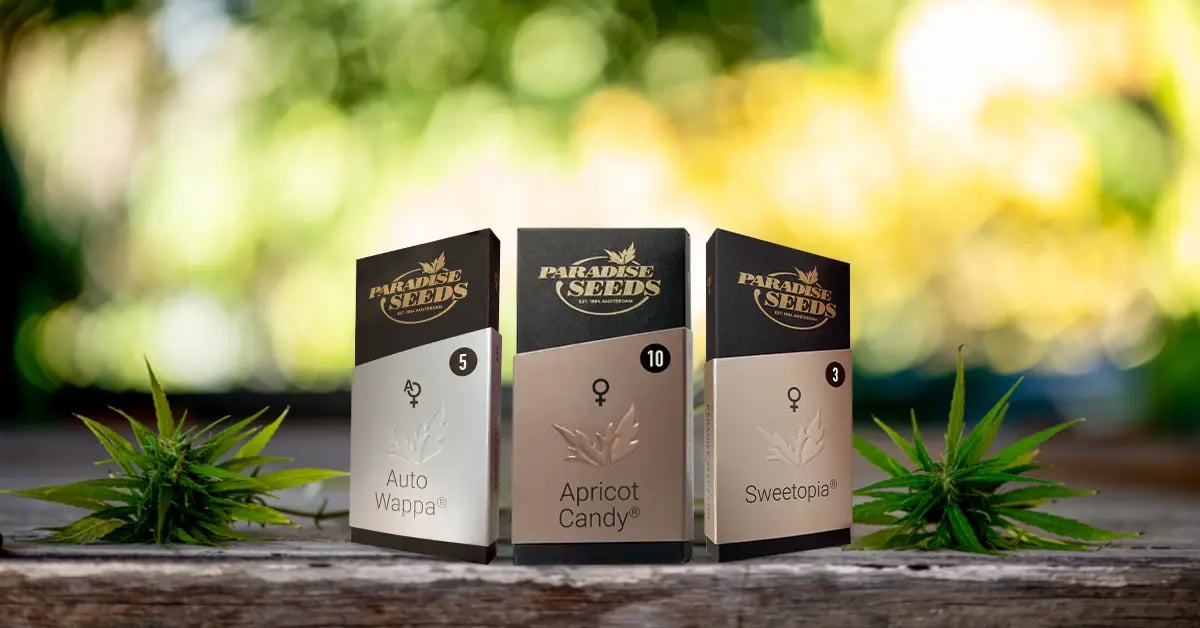
Good First Strains for Outdoors
On a first outdoor grow, pick a forgiving strain over the latest trend. Wappa is an easy, indica-leaning hybrid with good resistance, and its relatives Mendocino Skunk and Tangerine Sorbet grow just as easily. Prefer sativa-leaning plants? Nebula performs well outdoors, and L.A. Amnesia handles damp weather well. Check the outdoor details in each strain description: they tell you when to expect the harvest.
Choosing the Right Location
Growing outdoors is the purest, cheapest way to enjoy home-grown cannabis, and there’s real satisfaction in working with the season instead of against it. Getting the location right is the foundation everything else builds on:
- Sunlight. Cannabis needs a minimum of 6 hours of direct sun a day to produce quality buds. Don’t compromise here.
- Wind. An exposed, windy spot needs a fence or windbreak for protection.
- Water. Make sure your spot has real access to a water source. You’ll be watering regularly.
- Soil. Well-draining, nutrient-rich soil at the right pH makes everything downstream easier.
- Privacy. Pick a discreet spot to avoid unwanted attention, our guide to guerrilla growing has useful tactics even if you’re not growing on someone else’s land.
- Pot or ground? Pots trade some root space for mobility and control, useful if you might need to move a plant.
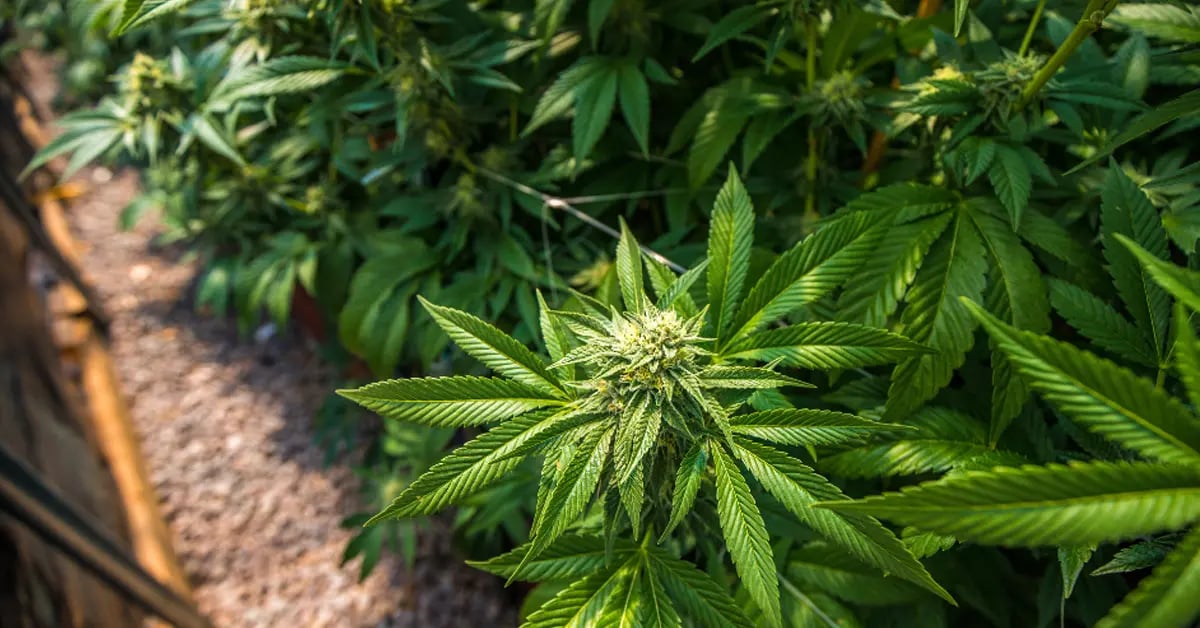
Northern vs Southern Climates: Grow for Your Latitude
Your latitude decides when your plants flower, what the weather does to them, and which strains will finish in time.
Northern Latitudes (roughly 45° to 55° North)
This covers most of central and northern Europe, Canada and the northern US. Photoperiod plants start flowering in late August or early September, so the buds ripen through autumn rain and colder nights. Bud rot is the main threat.
- Grow in large pots. They give you control: you can move plants under cover when a long wet spell comes. Square pots suit root development best.
- Train low and wide. Start LST or SCROG early in veg. You get many medium-sized colas instead of one dense top cola, with more air moving between them, and dense colas are where mold strikes first.
- Keep a cover ready. A low, wide plant is easy to protect: a frame of chicken wire with clear plastic sheeting over it keeps rain off the buds, or go one step further with a simple polytunnel.
- Choose strains for damp autumns. Avoid pure indicas, whose fat buds attract mold in wet weather. Indica-leaning hybrids such as Wappa and Mendocino Skunk are more forgiving. Autoflowers sown in late May or June finish by the end of summer, before the heaviest autumn rain.
Southern Latitudes (roughly 35° to 45° North)
This covers the Mediterranean, North Africa and California, and in the southern hemisphere places like the South African Cape and southern Australia. Summer temperatures can pass 40°C in parts of Spain, so heat, drought and pests are the main threats.
- Give afternoon shade. Between 13:00 and 17:00 the sun is strong enough to stress and stunt a plant. Pots let you move plants into shade; in the ground, pick a spot that gets shadow at midday.
- Keep the roots cool. Black and terracotta pots heat up and bake the soil. A plastic pot placed inside a second pot leaves an insulating air layer between them.
- Watch for heat-loving pests. Whitefly, spider mites and caterpillars thrive in hot, dry weather. Planting seedlings out in June often avoids the first wave. Our pests guide covers how to spot and treat each one.
- Let sativas enjoy the sun. Sativas thrive in strong sunshine: our Dutch Dragon has reached 3 metres in parts of Spain. Indica fans do better with indica-leaning hybrids such as Wappa or Belladonna. Autoflowers can give two or even three harvests a year this far south.
For more on heat, read our tips for growing in hot weather.
When to Plant Outdoor Cannabis Seeds
Planting out too early is one of the most common beginner mistakes. Spring days can be warm while nights still drop close to freezing, and young plants don’t cope well with that.
Transplant at about three nodes. When the seedling has about three nodes, or roots show at the bottom of its pot, it’s ready for a bigger pot or the ground.
Germinate indoors first. See our germination guide for the method. Keep seedlings on a sunny windowsill with the soil damp, not soaking, and resist digging up a seed to check on it.
Northern regions: move plants outside after the last frost. In northern Europe that usually means mid to late May. Until nights are stable, a plastic bottle with the bottom cut off makes a mini greenhouse over a young plant.
Southern regions: choose your plant size. Germinate in April or May for big plants, and keep them behind glass until temperatures settle. Germinate in June for shorter, more discreet plants with a shorter vegetative phase.
Building Good Soil
Soil quality is one of the biggest levers you have on plant health. Aim for a pH between 6.0 and 7.0, we recommend 6.5 specifically, slightly acidic. Check your pH regularly since drift in either direction shows up fast as nutrient deficiencies.
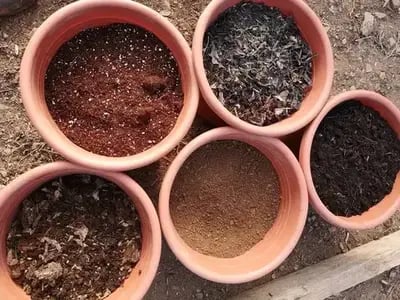
Start seedlings in a specialist seed compost, then move to a properly prepared mix once you transplant into the next growth stage. Plenty of growers prepare their own soil mix to control exactly what their plants are getting. Whichever route you take, the time spent getting soil right up front pays off for the rest of the grow.
Watering and Feeding
Watering stress looks different depending on where you are. Southern growers fight plants drying out in summer heat. Northern growers fight the opposite, weeks of steady rain, especially into autumn. Either way, the goal is the same balance you’d manage indoors: enough water to keep the plant thriving (a wick system can help automate this) without overwatering into root rot.
On feeding, plenty of effective natural fertilizers can go into the soil before planting and as a top dressing during the grow. Adding mycorrhizal fungi is also worth doing, it has a genuinely strong track record for building healthier soil and better yields.
Dealing With Rain: Polytunnels and Greenhouses
If you’re growing somewhere with a genuinely difficult climate, northern Europe being the classic example, a polytunnel or greenhouse is worth the investment. You still get real sunlight, but with real protection from the rain damage and mold risk that comes with prolonged wet weather hitting flowering buds. Cannabis resin repels water reasonably well on its own, but it’s no match for days of torrential rain.
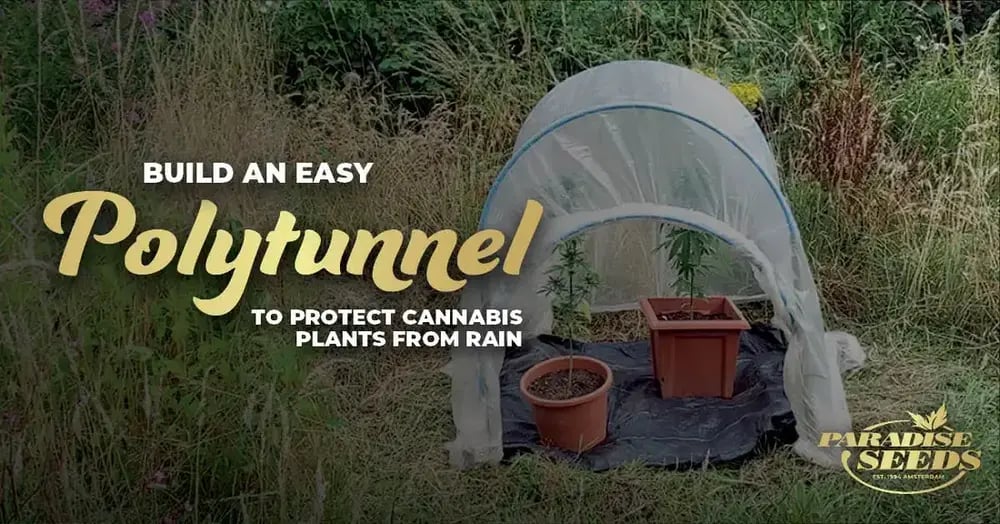
A full greenhouse setup is expensive, but a one-hour DIY polytunnel gets you most of the benefit for a fraction of the cost. The tradeoff in hot weather runs the other way: heat builds up fast under cover, and watering becomes the bigger challenge. Our greenhouse and polytunnel watering tips cover how to manage that.
Managing Pests, Disease, and Mold
Pests and disease cause more outdoor grow problems than almost anything else, and the fix starts with prevention: a healthy, well-watered, well-fed plant resists trouble far better than a stressed one. Catching problems early matters more outdoors than indoors, since you don’t control the environment the way you would in a tent.
Not every damaged leaf means pests or a deficiency. Outdoors, the weather causes look-alike symptoms:
Heat stress: leaf edges and tips curl upward. Black pots, or a plant standing on concrete or tiles, make it worse.
Wind burn: small brown or bronze patches in the middle of the leaf, sometimes with yellowing at the leaf base. It’s easily mistaken for nutrient burn, which starts at the leaf tips instead.
Too much rain: stunted growth, drooping and brown patches, often from waterlogged roots starting to rot.
Check the undersides of the leaves every week. If you see tiny dots, hold a white sheet of paper under the leaf and tap it: mites and other small pests show up clearly against the white. Our growing problems guide matches symptoms to their most likely cause.rol the environment the way you would in a tent.
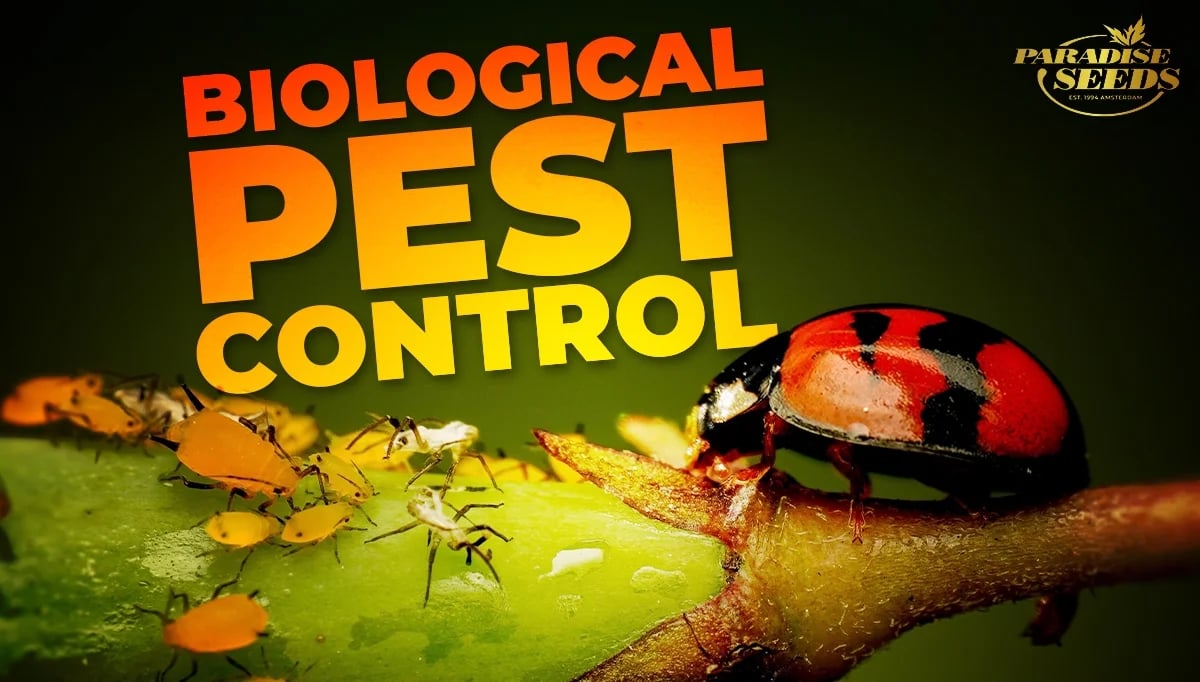
Where you can, work with nature instead of against it. Biological pest control and natural methods to strengthen plants against pests are both effective and don’t carry the downsides of harsher chemical treatments.
Growers in wetter, more temperate regions face a higher bud mold risk specifically. Know how to identify and treat it before it shows up, since symptoms can be misleading and a wrong diagnosis costs you time you don’t have. When in doubt, grow forums are full of growers who’ve already seen exactly what you’re looking at.
Ongoing Maintenance and Training
Once your plants are in the ground and moving through veg and flowering, staying on top of them matters as much as the initial setup. SCROG works outdoors too, and it does triple duty: better airflow, lower mold risk, and useful cover from curious neighbors. Our general tips on growing big outdoor plants are worth applying as your plants size up.
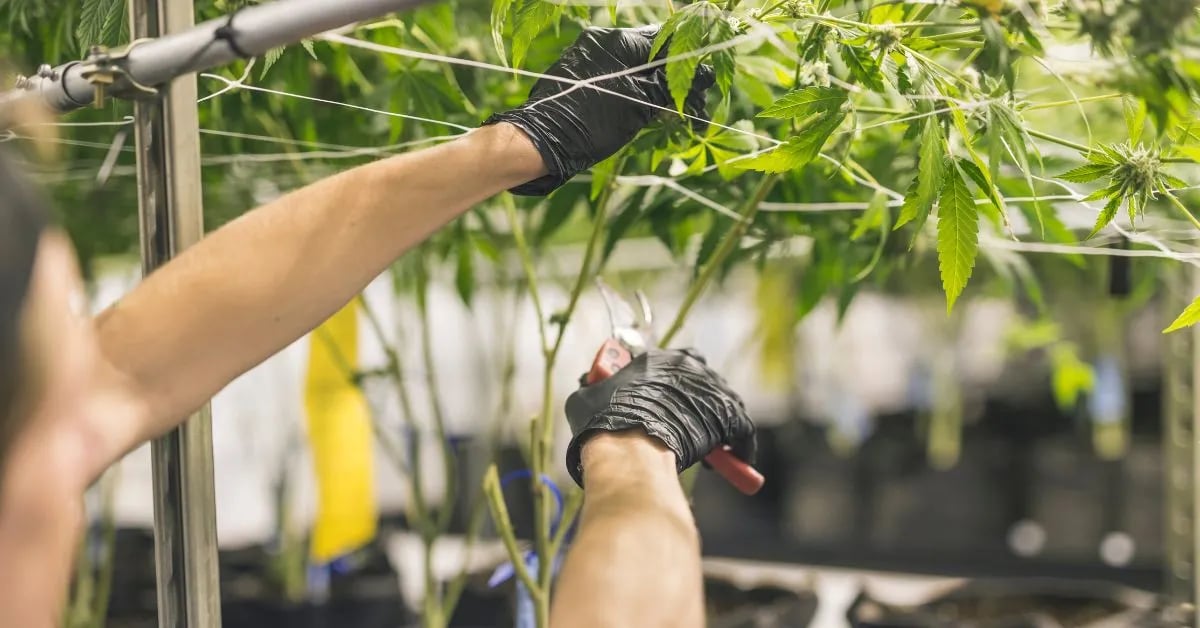
As you move from veg into flowering, typically August into early September, a few targeted steps make a real difference. See our flowering stage guide for what changes once buds form, and our guide to protecting your crop from bud to harvest.
If you’re growing autoflowers outdoors, timing works differently: expect harvest 60 to 70 days after planting regardless of season. Our outdoor autoflower tips cover pot sizing and how to stagger plantings for multiple harvests in one season.
Grow With the Season, Not Against It
We’ve been growing cannabis outdoors in Amsterdam’s own unpredictable climate since 1994, and if there’s one thing three decades has taught us, it’s that outdoor growing rewards preparation more than any other approach. You won’t always match an indoor grow’s consistency, but sun-grown bud, carried through a full season outside, is worth the extra work.
Ready to plant this season? Browse our outdoor-friendly autoflower seeds for a fast, forgiving start, or our full seed collection if you’re planning around a specific harvest window.