

Contents
Last updated: October 2026
Every cannabis plant goes through the same four stages on its way to harvest: germination, seedling, vegetative growth and flowering. Know what normal looks like at each stage and you’ll spot a problem in week two, not in week eight when it has already cost you yield. This guide walks you through every stage with pictures, a growth chart and the issues to watch for.

Cannabis growth chart: every stage at a glance
| Stage | Timing | Light (indoor) | What you’ll see | Your focus |
|---|---|---|---|---|
| Germination | Days 1-7 | Dark and warm | The seed cracks and a white taproot appears | Warmth and moisture |
| Seedling | Weeks 1-3 | 18/6 | Two rounded leaves, then the first serrated true leaves | Gentle light, 60-70% humidity |
| Vegetative | Weeks 3-8+ | 18/6 | Fast growth, new branches, leaves with 5-7 fingers | Nitrogen-rich feeding, training |
| Flowering | 8-11 weeks after the switch | 12/12 | White pistils, then buds and trichomes | Phosphorus and potassium, lower humidity |
This timeline is for photoperiod strains. Autoflowering strains run on their own clock and start flowering whatever light cycle you give them.
How long does it take to grow cannabis?
From seed to harvest, a photoperiod plant grown indoors usually takes three to five months: about a week to germinate, two to three weeks as a seedling, three to eight weeks of vegetative growth (you decide how long) and eight to eleven weeks of flowering. Outdoors, the season sets the pace. Sow in spring and, in most of Europe, you’ll harvest between late September and the end of October. Autoflowers are the fastest option and are often ready around ten to twelve weeks after sowing.
Stage 1: Germination (days 1-7)
Germination is simple in principle: moisture wakes the seed, softens the shell and lets the taproot push out. The most reliable way to germinate cannabis seeds is the wet paper towel method or a glass of water, kept somewhere warm and dark. Once the taproot is 1-2 cm long, move the seed to its starting medium.
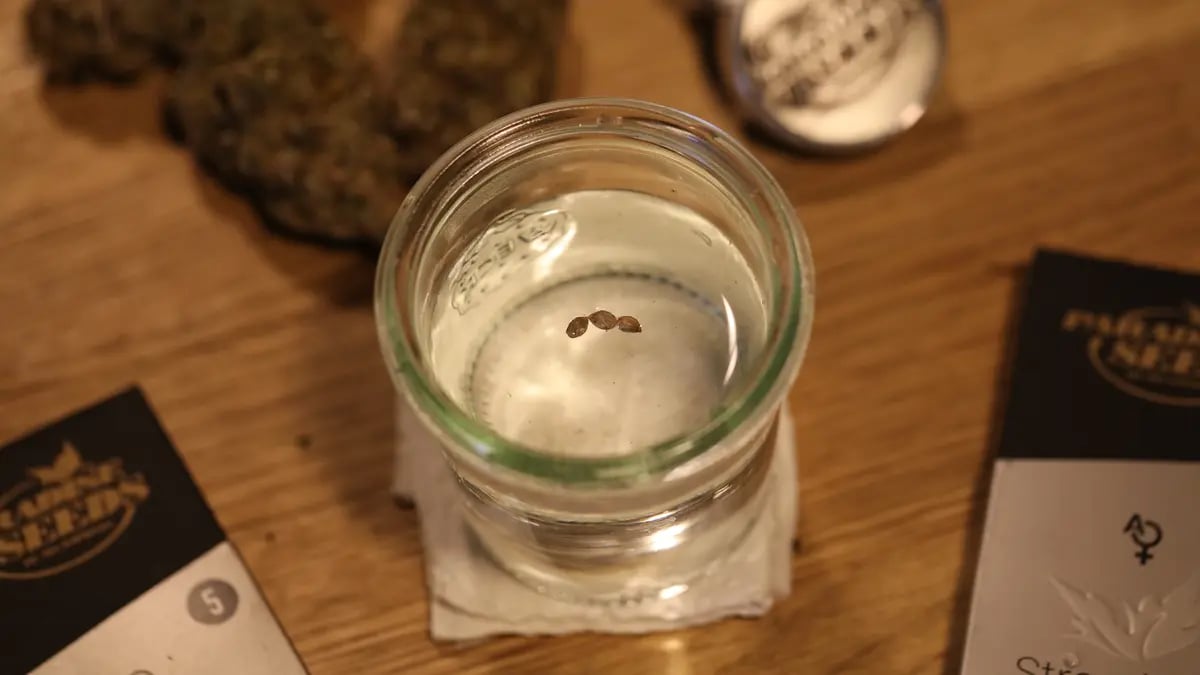
Most germination failures come down to the same few causes: too much water (the seed rots instead of softening), planting too deep, too much handling, or temperatures that swing up and down. Keep it simple, keep it warm, and resist the urge to check every few hours.
Stage 2: Seedling (weeks 1-3)
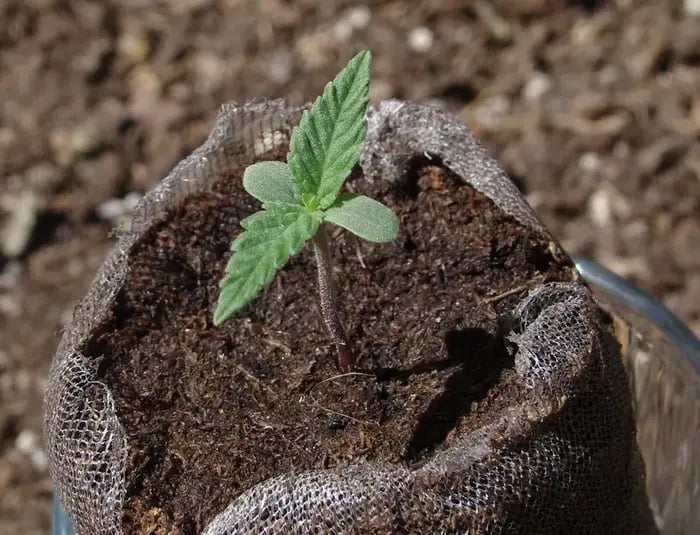
The seedling stage starts when the shoot breaks through the soil. So what does a cannabis seedling look like? The first thing you’ll see is a pair of small, rounded leaves (the cotyledons). They feed the plant until its first true leaves appear: serrated and single-bladed at first. Each new set then adds fingers, from one to three, then five, and eventually seven or more.
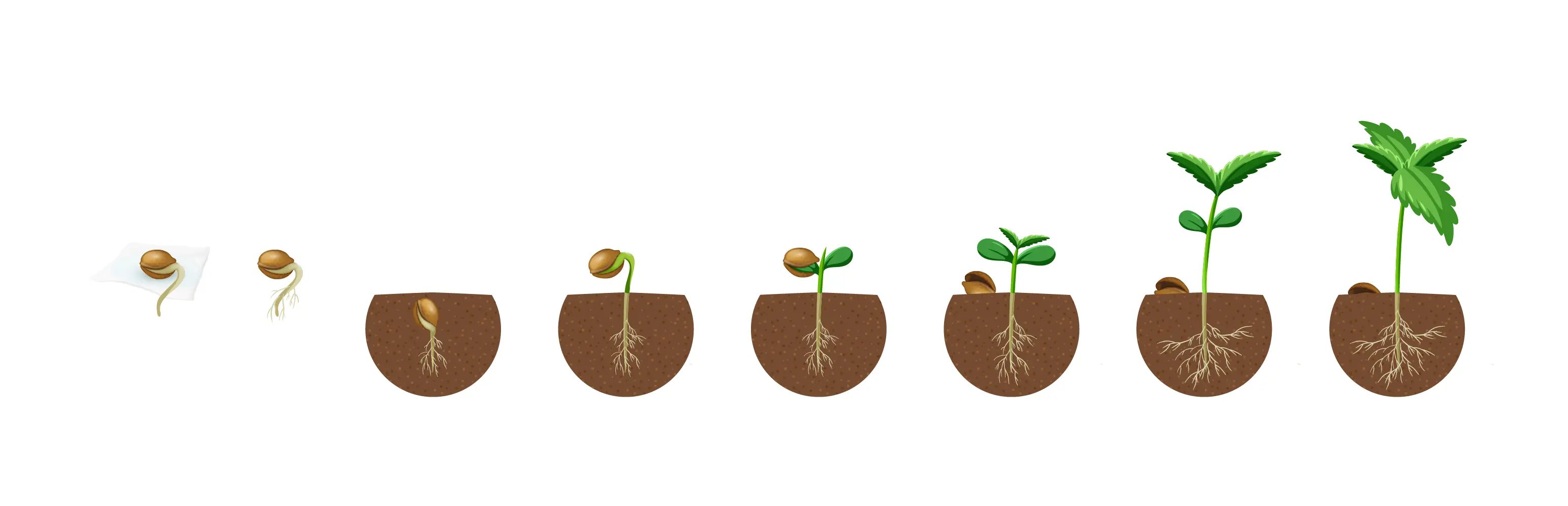
Underground, the roots spread at the same time, and that root system carries the plant through every stage that follows.
Seedlings are more fragile than they look. A thin, stretched stem means the plant is chasing light: move your grow light closer before the stem gets too weak to hold the plant up. Feeding too much too early does more harm than good, because seedling roots can’t handle a full nutrient schedule yet. Damping off, mildew and root rot are the most common problems here, so keep humidity around 60-70% without letting the soil stay soggy.
Stage 3: Vegetative growth (weeks 3-8+)
This is where the plant grows fastest and builds the branches and roots that will carry its buds later. Here’s what the vegetative stage looks like, week by week:
- Weeks 3-4: establishment. The plant has 6-8 sets of true leaves and a solid root system, and growth speeds up noticeably.
- Weeks 4-6: rapid growth. New nodes appear every few days, side branches fill out and you can see the plant grow from one day to the next.
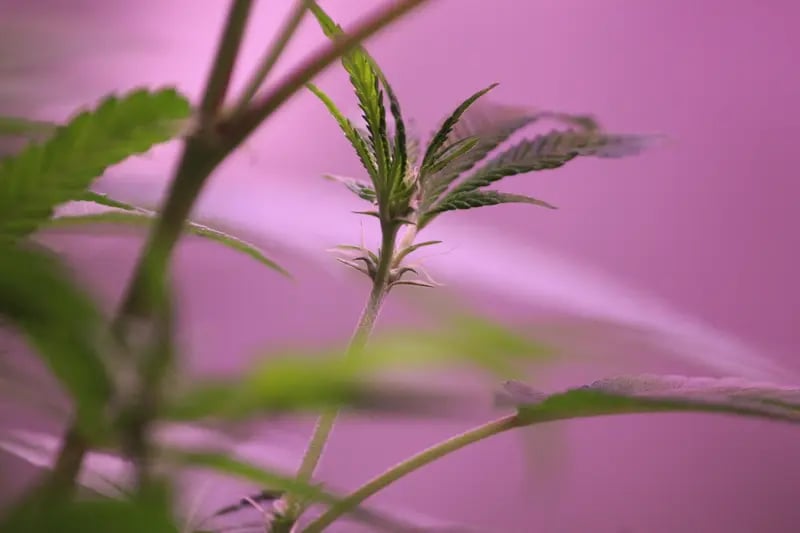
- Weeks 6-8: pre-flowering. The plant reaches sexual maturity and shows its first pre-flowers at the nodes. With feminized cannabis seeds you don’t need to check for males.
- The switch. Indoors, flowering starts when you change the light to 12/12. Outdoors, it starts as the nights get longer after midsummer, usually from late July or August.
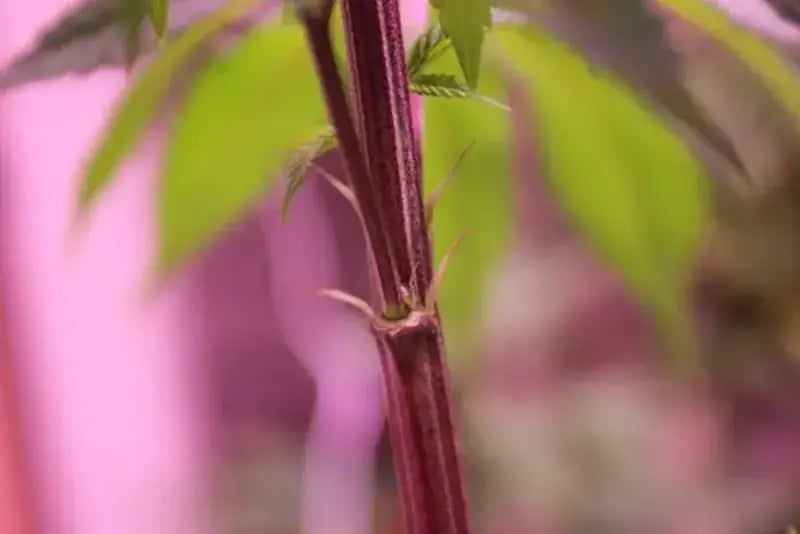
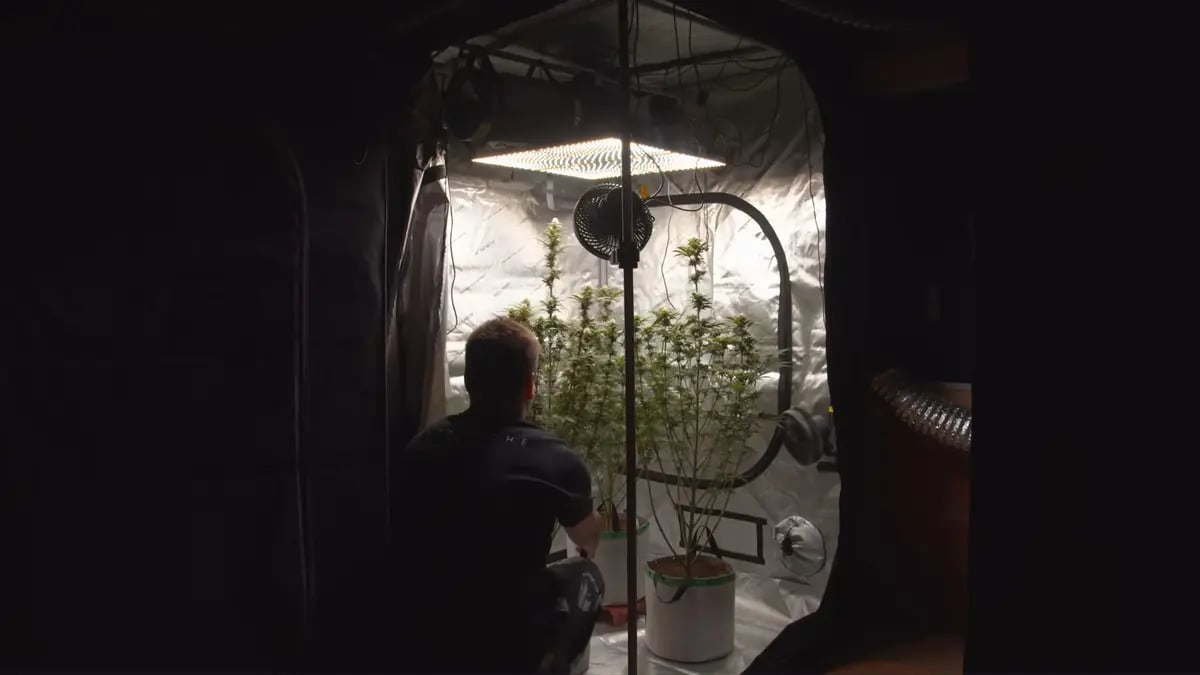
Indoor growers control this stage. Because you set the light cycle, veg usually lasts two to eight weeks, depending on your space and how big you want the plant before you switch to 12/12. A good rule of thumb: switch when the plant reaches about half your tent’s usable height, because most strains stretch a lot in the first weeks of flowering and can nearly double in size.
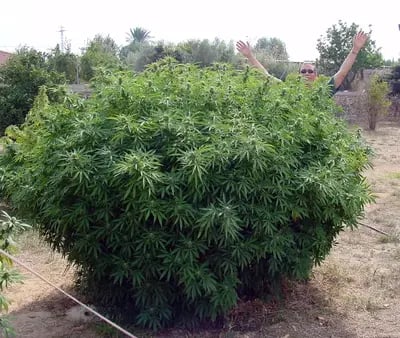
Outdoor growers follow nature. Outdoors, veg can last up to three months. In northern Europe, long summer days push flowering back, which is why autoflowers are popular there. Further south, the longer, warmer season gives photoperiod plants more time to grow big before they flower.
Train now, not later. While the plant is still building its structure, training has the biggest effect:
- Low stress training (LST): bend and tie down stems for an even canopy.
- SCROG: spread branches through a screen so light reaches every bud site.
- SOG: many small plants close together for a fast, even canopy.
- Topping and fimming: cut the main tip to create several main colas.
- Lollipopping: remove lower, shaded growth so the plant puts its energy into the top bud sites.
Problems in veg are mostly environmental: pests such as thrips, spider mites and fungus gnats, pH swings that show up as discoloured leaves, and over- or underwatering that slows root growth before you see anything above ground. Our cannabis pests guide helps you stay ahead of them.
Stage 4: Flowering (8-11 weeks)
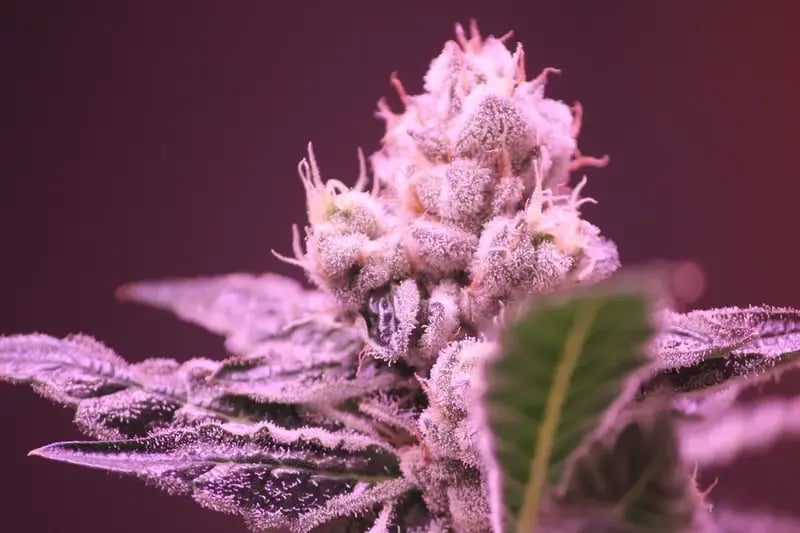
Flowering is where the months of work pay off, and it runs in three phases. Early flowering brings the first white pistils while the plant stretches. Mid flowering, the longest phase, is when buds bulk up and trichomes develop. Late flowering is when buds ripen and the trichomes turn from clear to milky and amber. Want to see what each week of flowering looks like? Our week-by-week guide to the flowering stage shows the changes in detail, with pictures.
Most strains need feeding through most of flowering. Stop 1-2 weeks before harvest and flush with plain water. Flowering also brings its own risks: light leaks at night can confuse an indoor plant’s flowering signal, nutrient and pH problems still matter, and stress from heat spikes or irregular light can turn a plant hermaphrodite.
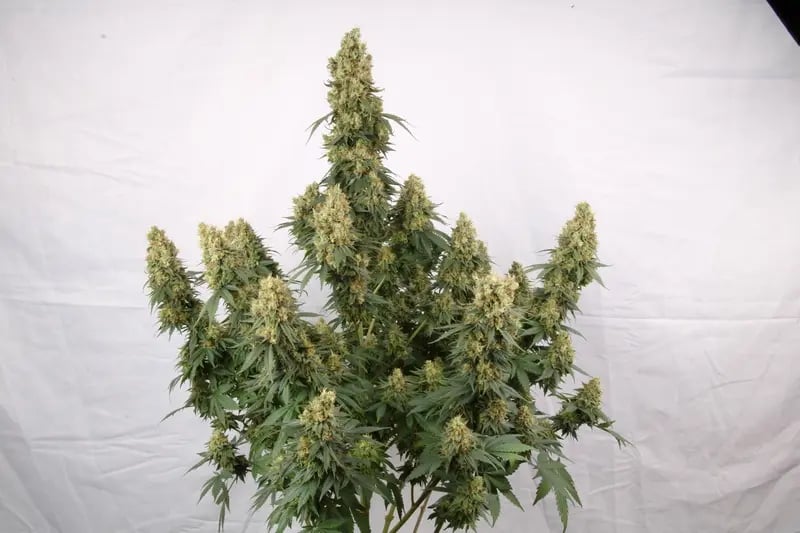
When the trichomes say it’s time, our harvesting and curing guide takes you through the chop, the dry and the cure.
Choose the right strain for your setup
Half the work of an easy grow happens before you plant anything. Think about your space and height, whether you grow indoors or outdoors, your climate, and how real the risk of mold or heat is where you live. Allkush stays compact and bushy indoors, which makes it a natural fit for SOG setups. Wappa is a medium-sized plant that suits limited indoor space and also grows well outdoors in northern latitudes. Short summers? Autoflowering seeds flower on their own schedule.
Know what normal looks like
We’ve been breeding cannabis seeds in Amsterdam since 1994, and if three decades have taught us one thing, it’s that most setbacks could have been avoided if the grower had known what normal looks like at that stage. Now you do: four stages, a rough timeline for each and the warning signs to watch for. Ready to start? Browse our feminized cannabis seeds and begin your next grow with genetics bred for consistent results from seed to harvest.